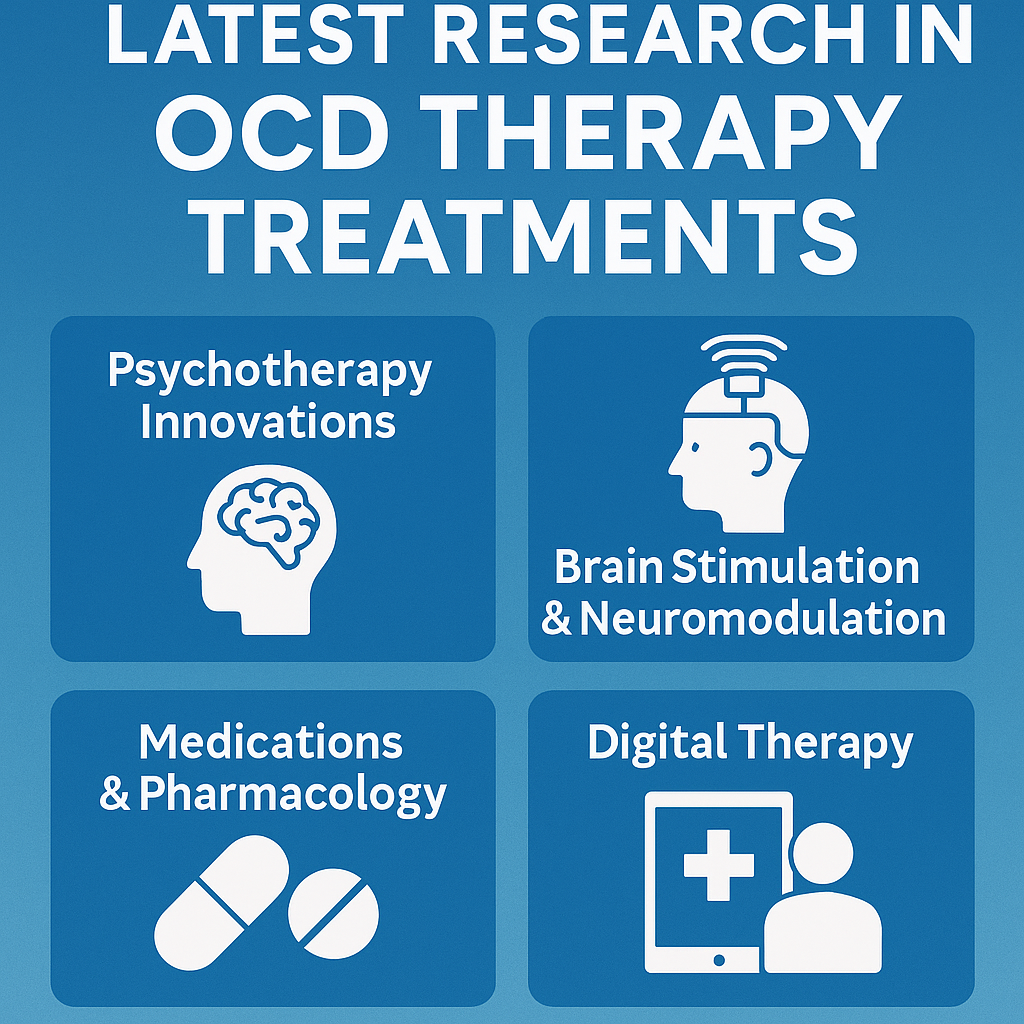
Latest Research in OCD Therapy Treatments


Latest Research in OCD Therapy Treatments: 12 Breakthroughs, Big Wins & What’s Next

 Discover the Latest Research in OCD Therapy Treatments—from enhanced ERP and I-CBT to deep TMS, closed-loop DBS, ketamine, and psilocybin trials—plus what’s ready now and what to watch next.

Note on terminology: We use “OCD” for Obsessive-Compulsive Disorder and summarize human studies published through October 10, 2025.


The State of the Science—Where OCD Treatment Stands in 2025

Latest Research in OCD Therapy Treatments

OCD affects millions worldwide and is often chronic. Gold-standard care combines exposure and response prevention (ERP)–based cognitive-behavioral therapy and serotonergic medications (SSRIs or clomipramine). Yet many people remain partially treated, avoid exposures, or struggle with side effects. That’s why the Latest Research in OCD Therapy Treatments focuses on making therapy stickier, accelerating neuromodulation gains, and expanding pharmacology beyond serotonin.

In 2025, three big themes dominate: (1) upgrading psychotherapy mechanics to reduce drop-outs and improve flexibility; (2) neuromodulation that targets brain circuits with increasing precision; and (3) glutamatergic medication strategies (like memantine or ketamine) and careful exploration of psilocybin. Together, these lines of research aim to shorten time-to-response, lift treatment resistance, and personalize care.

What’s changed most since 2023–2024? We’ve seen: ACT-informed ERP protocols with durable outcomes; clearer evidence summaries for I-CBT; early randomized data on mixed-reality exposures (promising engagement, mixed symptom effects); protocol innovations in deep TMS; and crucial “closed-loop” insights from DBS studies showing network-level predictors of improvement. Nature+8ScienceDirect+8PMC+8


Psychotherapy Innovations Leading the Pack

ERP 2.0—ACT-informed and Process-Based Upgrades

A 2025 randomized trial integrating Acceptance and Commitment Therapy (ACT) with ERP reported significant reductions in OCD severity and better psychological flexibility maintained at follow-up. Practically, this means clinicians pair exposures with skills like values work and willingness, improving adherence for clients who might otherwise white-knuckle or avoid exposures. For many, ERP “feels” different—less like fighting thoughts and more like moving toward meaningful life goals. ScienceDirect

Inference-Based CBT (I-CBT)

I-CBT targets the reasoning process behind obsessions (how we infer danger) rather than the content of thoughts. A 2024 systematic review concluded that I-CBT and standard CBT are both effective; non-inferiority to CBT remains inconclusive, but I-CBT showed better tolerability, suggesting a helpful option for clients who don’t click with classic ERP framing. In practice, I-CBT may fit those whose doubts feel “50/50 plausible,” such as harm, contamination, or checking themes driven by “what-if” reasoning chains. PMC+1

Mixed-Reality & VR Exposure

Immersive tech is racing ahead. A 2025 randomized clinical trial of mixed-reality ERP (MERP) in contamination OCD did not outperform an active control on primary outcomes—but qualitative feedback was valuable for iterative design (e.g., optimizing presence, grading, and homework transfer). Translation: MR/VR exposure may boost engagement, but protocols still need refinement to match real-world triggers and sustain gains. JAMA Network+1


Brain Stimulation & Neuromodulation—From Clinic to Circuit

Deep TMS (H7 Coil) & Protocol Tweaks

Deep TMS is FDA-cleared for OCD and keeps evolving. Research in 2024–2025 explored accelerated schedules, theta-burst rhythms, and pairing sessions with symptom provocation (activating OCD circuitry before pulses). A 2025 meta-analysis across indications suggests provocation can enhance TMS response, supporting the clinical habit of brief, targeted trigger exposure just before stimulation. Pilot and naturalistic studies are testing EEG-guided or 3-Hz iTBS paradigms with the H7 coil. While large definitive RCTs are pending, the direction is clear: more precise timing, dosing, and personalization. JAMA Network+2PMC+2

DBS Edges Toward ‘Closed-Loop’

DBS remains a last-resort therapy for severe, refractory OCD, but the science is moving fast. 2024–2025 work shows therapeutic DBS can suppress activity across regions of the default-mode network, and neural ‘periodicity’ disruption in chronic recordings correlates with clinical state—pointing toward biomarkers for adaptive (closed-loop) stimulation. Reviews in late 2024 also chart the roadmap for fully adaptive systems in OCD. Bottom line: implanted devices are becoming smarter, aiming to deliver the right stimulation at the right moment. PMC+2Nature+2

Focused Ultrasound & Vagus Nerve Stimulation (VNS)

Alongside TMS/DBS, focused ultrasound is being explored for psychiatric indications, with early promise; VNS continues as a niche option. A 2025 overview describes this broader “electroceuticals” toolkit reshaping psychiatric care, though access and cost remain hurdles. The Washington Post


Medications & Novel Pharmacology

Glutamatergic Agents—Memantine, Ketamine & Friends

A 2025 meta-analysis supports memantine augmentation for refractory OCD, extending earlier evidence (four RCTs to date). Clinically, memantine is often added to an SSRI or clomipramine in partial responders, with monitoring for cognitive effects and dizziness. PubMed+1

Ketamine—delivered intramuscularly, intravenously, or orally—shows rapid reductions in OCD symptoms for a subset of treatment-resistant patients. A 2024 controlled study found two IM ketamine doses outperformed an active control; a 2025 extension suggests six weeks of oral ketamine can sustain improvements and is generally well-tolerated. Large, blinded trials are underway to clarify durability, optimal dosing, and who benefits most. CenterWatch+3PMC+3PMC+3

Other glutamatergic strategies (e.g., riluzole, D-cycloserine augmentation of ERP) remain mixed or experimental—watch this space. Psychopharmacology Institute

Psychedelics (Psilocybin) for OCD

Early controlled work (small samples) suggests psilocybin may reduce OCD symptoms, with multiple double-blind trials active in 2025. A recent report indicates that a single 10 mg dose was well-tolerated with potential efficacy; rodent models also show durable behavioral effects in OCD-like paradigms. Translation for clinicians: interesting signal, but outside trials it remains investigational, requiring rigorous safety protocols and careful screening. Nature+5PMC+5ClinicalTrials+5


Digital First—Tele-ERP, Apps, and Real-World Outcomes

Telehealth delivery of ERP and CBT expanded rapidly and now underpins access, especially in rural areas. Research emphasizes adherence, therapeutic alliance over video, and data-driven homework (e.g., symptom provocation timing for TMS visits). While not all platforms are equal, remote care can match in-person outcomes when therapists follow graded, values-aligned exposures and track progress weekly. (General synthesis from psychotherapy and TMS literature above.)


Precision Psychiatry—Matching People to Treatments

Two converging threads: psychological predictors and neural biomarkers. A 2025 study examined how pre-treatment anxiety and feared consequences predict outcomes—useful for case-formulation and pacing exposures. In parallel, DBS chronic recordings identify neural signatures linked to symptom states, potentially guiding stimulation or even informing noninvasive targets. Together, these advances aim to put the right person into the right treatment earlier. ScienceDirect+1


Safety, Side Effects, and Ethics

  • Neuromodulation: TMS is noninvasive with transient scalp discomfort; DBS involves surgery (infection, hemorrhage, hardware issues) but can transform quality of life in carefully selected, severe cases. Adaptive/closed-loop systems introduce new cybersecurity and consent considerations. PubMed

  • Ketamine: Rapid benefits must be weighed against dissociation, blood-pressure changes, and abuse risk; structured monitoring and continuity plans are essential. PMC+1

  • Psilocybin: Only in approved trials with medical oversight, psychological support, and screening for psychosis risk. ClinicalTrials


Clinician’s Quick Guide: What to Use Now vs. What to Watch

Use Now (evidence-supported):

  • ERP (with ACT/process-based elements if helpful) ScienceDirect

  • SSRIs/clomipramine; consider memantine augmentation in refractory cases PubMed

  • Deep TMS (H7 coil) where available, with thoughtful provocation pairing JAMA Network

Consider in Specialized Settings:

  • Ketamine for treatment-resistant OCD, within structured programs; plan maintenance strategies. PMC+1

  • DBS for severe, refractory OCD in expert centers; increasing use of biomarkers to refine candidacy. PMC

Watch Next:

  • Mixed-reality/VR ERP protocol refinements, accelerated TMS dosing, closed-loop DBS, and psilocybin RCT readouts. ClinicalTrials+3PMC+3PMC+3


FAQs on Latest Research in OCD Therapy Treatments

1) What’s the most effective first-line therapy in 2025?
ERP-based CBT remains first-line; adding ACT-style skills can improve engagement and durability for many patients. ScienceDirect

2) Is I-CBT as good as standard CBT/ERP?
Both work; non-inferiority isn’t fully established, but I-CBT may be better tolerated for some, especially when reasoning styles drive obsessions. PMC

3) Does deep TMS really help OCD?
Yes, it’s FDA-cleared. New work suggests symptom provocation before sessions may enhance results; accelerated schedules are under study. JAMA Network+1

4) Who should consider DBS?
Only those with severe, treatment-refractory OCD after multiple adequate trials. New research is improving biomarker-guided selection and programming. PMC+1

5) Are ketamine or psilocybin ready for routine care?
Ketamine shows promise for rapid relief in some treatment-resistant patients, but maintenance and long-term data are evolving. Psilocybin remains experimental and should only be pursued in clinical trials. PMC+2PMC+2

6) Do VR or mixed-reality exposures work better than traditional ERP?
Not yet. A 2025 RCT in contamination OCD found no significant superiority over an active control, but user feedback is shaping better designs. JAMA Network

7) How close are we to personalized treatment matching?
Getting closer—studies link pre-treatment anxiety/feared consequences and neural biomarkers to outcomes, which may soon guide precision care. ScienceDirect+1


Conclusion—From Breakthroughs to Better Lives

The Latest Research in OCD Therapy Treatments shows real traction: smarter ERP (often ACT-informed), evolving deep TMS protocols, DBS moving toward closed-loop intelligence, pragmatic ketamine strategies, and careful psilocybin trials. For patients and clinicians, the message is hopeful and practical—stick with proven first-lines, consider augmentation thoughtfully, and keep one eye on trials translating neuroscience into everyday relief.


External Resource (Primer)

  • International OCD Foundation—Transcranial Magnetic Stimulation for OCD (clear overview for patients and families). International OCD Foundation

Nutrition and Natural Supplements for OCD Relief


Nutrition and Natural Supplements for OCD Relief: 10 Proven Strategies for Mental Balance

Nutrition and Natural Supplements for OCD Relief: 10 Proven Strategies for Mental Balance
Nutrition and Natural Supplements for OCD Relief

Discover how nutrition and natural supplements for OCD relief can help balance your mood, reduce compulsive thoughts, and support long-term mental wellness. Learn the best foods, vitamins, and herbal remedies backed by science.


Understanding OCD and Its Root Causes

Obsessive-Compulsive Disorder (OCD) is more than just excessive cleaning or checking behaviors—it’s a complex mental health condition characterized by unwanted, intrusive thoughts (obsessions) and repetitive actions (compulsions). These patterns often arise from imbalances in neurotransmitters such as serotonin, dopamine, and glutamate.

While therapy and medication are standard treatments, emerging research highlights that nutrition and supplementation can play a supportive role in managing OCD symptoms. Understanding what fuels or depletes your brain’s chemistry is essential for achieving mental balance.


The Role of Nutrition in Mental Health

Your brain is an energy-hungry organ—it consumes about 20% of your total energy intake. Poor nutrition can disrupt neurotransmitter synthesis and hormonal regulation, worsening anxiety and obsessive behaviors.

A nutrient-dense diet ensures stable blood sugar, reduced inflammation, and optimal serotonin levels. Nutritional psychiatry now recognizes that a well-balanced diet can significantly reduce the intensity of OCD and anxiety-related symptoms.


Key Nutrients That Support OCD Relief

Let’s explore some nutrients that directly support brain health and OCD symptom management.

Omega-3 Fatty Acids and Brain Function

Omega-3 fatty acids—especially EPA and DHA—are crucial for maintaining healthy cell membranes and promoting serotonin transmission. Studies show that individuals with OCD often have lower Omega-3 levels.

Top Food Sources:

  • Salmon, mackerel, and sardines

  • Flaxseeds and chia seeds

  • Walnuts and algae oil

Regular consumption of these foods or supplements can enhance emotional stability and reduce intrusive thoughts.

The Importance of B Vitamins

B-complex vitamins, particularly B6, B12, and folate, are essential for producing neurotransmitters like serotonin and dopamine. Deficiencies in these vitamins have been linked to anxiety, depression, and obsessive behaviors.

Good Sources: Eggs, legumes, leafy greens, and fortified grains.

Magnesium’s Calming Effect on the Nervous System

Magnesium plays a vital role in calming the nervous system by regulating NMDA receptors, which affect glutamate levels—a key factor in OCD.

Magnesium-Rich Foods:

  • Dark chocolate

  • Pumpkin seeds

  • Spinach

  • Almonds

Adding a magnesium supplement or increasing dietary intake can help reduce compulsive urges and promote relaxation.


Amino Acids and Protein Balance

Amino acids like tryptophan and tyrosine are building blocks for serotonin and dopamine. Ensuring sufficient protein intake helps maintain neurotransmitter balance, aiding in OCD management.


Top Natural Supplements for OCD Relief

Beyond nutrition, certain natural supplements have shown promising results in clinical studies for reducing OCD symptoms.

N-Acetyl Cysteine (NAC)

NAC is one of the most well-studied supplements for OCD. It helps regulate glutamate, a neurotransmitter often overactive in OCD patients. Clinical trials have demonstrated significant symptom reduction with NAC supplementation (typically 1,200–3,000 mg daily).

St. John’s Wort

This herbal remedy has natural antidepressant properties by inhibiting serotonin reuptake. However, it should not be combined with SSRIs due to potential interactions. Always consult a healthcare provider before use.

Inositol and OCD

Inositol, a naturally occurring compound similar to B vitamins, supports serotonin signaling. Multiple studies have found that high-dose inositol supplementation (12–18g daily) can help reduce intrusive thoughts and compulsive behaviors.

L-Theanine and Green Tea Extracts

Found in green tea, L-Theanine promotes calmness without drowsiness. It enhances alpha brain waves, reducing anxiety and mental hyperactivity—common features of OCD.

Probiotics and the Gut-Brain Connection

The gut microbiome produces over 90% of the body’s serotonin. Probiotic supplements that restore gut balance can positively influence mental clarity and emotional regulation.


Dietary Patterns That Improve OCD Symptoms

The Mediterranean diet, rich in fruits, vegetables, whole grains, and healthy fats, is linked to improved mood and cognitive health. Avoiding processed foods, refined sugars, and artificial additives helps prevent inflammation, which can exacerbate OCD symptoms.


Foods to Avoid for OCD Management

  • Caffeine: Can trigger anxiety and restlessness.

  • Refined Sugars: Cause blood sugar spikes that worsen mood swings.

  • Artificial Additives: Certain dyes and preservatives may disrupt brain chemistry.


Lifestyle and Holistic Approaches to Support Supplements

Natural supplements work best when combined with healthy habits:

  • Regular Exercise: Boosts endorphins and serotonin.

  • Mindfulness Meditation: Helps manage intrusive thoughts.

  • Quality Sleep: Regulates neurotransmitter activity.


Safety, Dosage, and Consulting Professionals

While natural supplements are generally safe, overuse or interactions with prescription drugs can cause adverse effects. Always consult a licensed practitioner before starting new supplements.


Real-Life Success Stories and Case Studies

Many individuals have reported noticeable improvements in OCD symptoms after optimizing their nutrition and using targeted supplements. For example, a 2020 case study from the Journal of Psychiatric Research found that patients using NAC and magnesium showed up to a 40% reduction in compulsive behavior scores.


FAQs About Nutrition and Natural Supplements for OCD Relief

1. Can diet alone cure OCD?
No, but it can significantly reduce symptom severity when combined with therapy or medication.

2. What’s the best natural supplement for OCD?
N-Acetyl Cysteine (NAC) shows the most consistent results in scientific studies.

3. How long do supplements take to show results?
Typically 4–8 weeks, depending on consistency and dosage.

4. Can probiotics really affect mental health?
Yes, through the gut-brain axis, probiotics can enhance serotonin production and emotional regulation.

5. Should I stop medication before trying supplements?
Never. Always consult your psychiatrist before adjusting medication.

6. Are there side effects to natural supplements?
Mild digestive discomfort is common, but serious effects are rare when taken as directed.


Conclusion: Restoring Balance Through Natural Means

OCD is a complex condition, but by focusing on nutrition and natural supplements, you can empower your brain to heal and balance itself naturally. Combining dietary improvements, targeted supplementation, and lifestyle changes creates a holistic approach to relief and recovery.


🔗 External Reference:

Best OCD Support Groups


💬 Best OCD Support Groups: 15 Trusted Online and Offline Communities for Real Help

Best OCD Support Groups: 15 Trusted Online and Offline Communities for Real Help
Best OCD Support Groups


Explore the best OCD support groups online and offline. Find trusted communities, peer-led spaces, and therapy-based networks to support your OCD recovery journey.


Understanding OCD Support Groups and Their Importance

What Are OCD Support Groups?

OCD support groups are safe, structured environments where individuals with Obsessive-Compulsive Disorder can connect, share experiences, and learn coping strategies. These groups may be led by peers who live with OCD or by mental health professionals. Whether online or offline, their core purpose is the same—to remind you that you’re not alone.

Why Support Groups Matter for OCD Recovery

Support groups bridge the gap between therapy and everyday life. They provide encouragement, empathy, and real-world strategies that therapists might not always offer. Many participants report feeling seen and understood for the first time, which can significantly reduce feelings of shame or isolation.


Benefits of Joining an OCD Support Group

Emotional Validation and Shared Experience

OCD often makes individuals feel “different” or misunderstood. Hearing others describe the same intrusive thoughts or compulsions normalizes your experience and reduces self-stigma.

Learning Practical Coping Skills

Members often share strategies from Cognitive Behavioral Therapy (CBT) or Exposure and Response Prevention (ERP). Learning from peers who’ve overcome similar challenges can accelerate your own progress.

Accountability and Motivation

Having a group that checks in regularly helps maintain treatment consistency and encourages recovery momentum.

Reducing Isolation and Stigma

Support groups foster belonging. Simply knowing others face similar struggles promotes hope and empowerment.


Types of OCD Support Groups

Peer-Led vs. Professionally-Led Groups

  • Peer-Led Groups: Run by individuals who live with OCD; emphasize shared experience and emotional connection.

  • Professionally-Led Groups: Guided by therapists or counselors; offer structured discussions and clinical insights.

In-Person vs. Online Communities

Online groups provide flexibility and anonymity. In-person gatherings, meanwhile, allow for deeper social bonds and face-to-face empathy.

General OCD vs. Specialized Subtype Groups

Some groups focus on specific OCD themes—such as Relationship OCD (ROCD), Contamination OCD, or Pure O. Joining a subtype-focused group helps you find tailored support.


Best Online OCD Support Groups (2025 Edition)

1. International OCD Foundation (IOCDF) Online Support Groups

The IOCDF offers dozens of peer and clinician-led online meetings each month, including youth and family-focused sessions. Accessible globally, these meetings are ideal for beginners.

👉 Visit: https://iocdf.org

2. OCD UK Community Forum

OCD UK hosts one of the most active online OCD communities in Europe. Members discuss coping strategies, share treatment stories, and support newcomers 24/7.

👉 Visit: https://ocduk.org

3. Reddit OCD Subreddit (r/OCD)

This subreddit provides a judgment-free zone where over 100k members exchange experiences, memes, and advice. While not a substitute for therapy, it offers genuine peer understanding.

4. NOCD Peer Support & Teletherapy Community

The NOCD app blends therapy with peer support. Members can join moderated chats, group sessions, and connect directly with licensed OCD therapists.

👉 Visit: https://www.treatmyocd.com

5. Anxiety and Depression Association of America (ADAA) Peer Forum

The ADAA’s moderated peer forum supports individuals dealing with OCD, anxiety, and related disorders.

👉 Visit: https://adaa.org

6. Discord and Facebook OCD Support Communities

Private OCD Discord servers and Facebook groups offer informal peer chat spaces. Many are moderated and provide anonymity and instant access to community support.


Best In-Person OCD Support Groups and Meetups

1. IOCDF Local Affiliate Groups

These local chapters host face-to-face OCD and anxiety support meetings in many U.S. cities. Sessions include guided discussion and ERP-friendly resources.

2. NAMI OCD and Anxiety Support Programs

The National Alliance on Mental Illness (NAMI) offers OCD-specific and general anxiety support groups led by trained facilitators.

👉 Visit: https://nami.org

3. Hospital and Clinic-Based OCD Therapy Groups

Many psychiatric hospitals and clinics—such as Rogers Behavioral Health—offer structured group therapy combining education, ERP, and peer discussion.

4. Faith-Based and Community OCD Meetups

Certain community centers and churches host OCD support meetings emphasizing hope, spirituality, and acceptance-based healing.


How to Choose the Right OCD Support Group for You

Assessing Your Comfort Level and Needs

Ask yourself:

  • Do I prefer professional guidance or peer connection?

  • Am I more comfortable online or in person?

  • Do I want a general OCD group or a specific subtype?

Group Size, Format, and Frequency

Smaller groups often allow for deeper sharing. Larger communities can provide diverse perspectives. Choose one that aligns with your emotional bandwidth.

Confidentiality and Group Safety

Before joining, ensure the group has clear confidentiality rules to protect members’ privacy.


Tips for Getting the Most Out of OCD Support Groups

Participate Consistently and Honestly

Attending regularly builds trust and community. Authentic sharing encourages mutual healing.

Set Realistic Expectations

Support groups are not a replacement for therapy. They complement treatment, offering peer empathy and encouragement.

Balance Group Support with Professional Treatment

Use what you learn in therapy to contribute to the group—and vice versa. This integrated approach accelerates growth.


When Support Groups Aren’t Enough

Signs You Need Professional Help

If intrusive thoughts or compulsions worsen, or if you experience depression or panic attacks, professional intervention is essential.

How Therapy Complements Peer Support

Therapies like ERP and CBT help you challenge OCD’s root causes, while groups provide emotional support between sessions.


Real Stories: Lives Changed by OCD Support Communities

Personal Testimonies of Recovery and Growth

Many individuals credit support groups with saving their lives. Being surrounded by understanding peers fosters confidence to face OCD head-on.

The Power of Shared Healing

Group members often describe mutual accountability as their biggest motivator. Collective healing makes recovery feel achievable and sustainable.


Frequently Asked Questions (FAQs)

Q1. Are OCD support groups free to join?
Most peer-led groups (like IOCDF and OCD UK) are free or donation-based. Some therapy-based groups may charge small session fees.

Q2. How can I find OCD support groups near me?
Visit iocdf.org/find-help/support-groups to search by city or ZIP code.

Q3. Are online OCD support groups effective?
Yes. Studies show online groups provide comparable emotional benefits to in-person meetings.

Q4. Can family members join OCD support groups?
Many offer family or caregiver sessions focused on education and communication skills.

Q5. Is anonymity respected in online groups?
Most reputable groups prioritize confidentiality and allow participants to remain anonymous.

Q6. What if I’m nervous about speaking up?
It’s perfectly fine to listen quietly at first. Participation often becomes easier with time.


Conclusion: Finding Strength and Hope in OCD Support Communities

Joining the best OCD support groups—whether online or in person—can transform your recovery journey. These communities remind you that healing isn’t solitary; it’s shared. By connecting with peers who understand, learning new coping tools, and building hope together, you’ll find strength to face OCD one step at a time.

Your voice matters, your experience matters, and together, healing is possible.

OCD and Relationships


💞 OCD and Relationships: 15 Expert-Backed Ways to Support a Loved One Effectively

OCD and Relationships: 15 Expert-Backed Ways to Support a Loved One Effectively
OCD and Relationships


Learn how OCD and relationships interact and discover practical, compassionate ways to support a loved one living with OCD. Build stronger communication, emotional balance, and long-term understanding.


Understanding OCD in the Context of Relationships

What Is Obsessive-Compulsive Disorder (OCD)?

OCD is a mental health condition marked by intrusive thoughts (obsessions) and repetitive behaviors (compulsions). These actions serve as coping mechanisms to alleviate anxiety or distress. While the disorder primarily affects the individual, its reach often extends deeply into relationships—impacting partners, families, and close friends.

Common Misunderstandings About OCD and Its Impact on Relationships

A widespread misconception is that OCD is merely about cleanliness or perfectionism. In reality, it can involve countless forms—fear of harm, relationship doubts, or moral scrupulosity. When misunderstood, partners may feel confused or helpless. Understanding OCD as a neurological condition—not a personality flaw—is essential for compassion and support.


The Emotional Impact of OCD on Relationships

How OCD Affects Communication and Intimacy

OCD often inserts itself into communication, leading to repeated reassurance-seeking or avoidance of emotional closeness. A partner may repeatedly ask, “Do you still love me?” or avoid intimacy due to intrusive thoughts. This dynamic can strain the bond if left unaddressed.

The Role of Reassurance-Seeking in Relationships

Reassurance can feel loving but quickly becomes part of the compulsion cycle. Constantly affirming safety or affection reinforces anxiety rather than easing it. Learning when to reassure—and when to pause—is a critical skill for partners.

Emotional Exhaustion and Caregiver Burnout

Supporting a loved one with OCD is emotionally taxing. Constant vigilance, worry, or conflict can lead to burnout. It’s vital for supporters to maintain self-care routines and seek their own emotional support when needed.


Recognizing Signs That OCD Is Affecting Your Relationship

Compulsions That Involve Partners

Some OCD compulsions directly pull partners in—like checking, confessing, or reassurance rituals. When participation becomes expected, both people can become trapped in the OCD cycle.

Avoidance Behaviors and Relationship Strain

Avoidance—such as steering clear of certain conversations, places, or physical contact—can make relationships feel distant. Recognizing these behaviors early helps prevent emotional disconnection.

When Conflict Becomes a Pattern

If minor disagreements escalate frequently or revolve around OCD triggers, it’s a sign that professional guidance may help restore balance and clarity.


How to Support a Loved One with OCD

Educate Yourself About OCD

Knowledge is the foundation of empathy. Learn about Obsessive-Compulsive Disorder through credible sources like the International OCD Foundation (IOCDF). Understanding the mechanisms behind obsessions and compulsions helps you respond with compassion instead of frustration.

Be Patient and Compassionate, Not Enabling

Support means encouraging progress, not accommodating rituals. Gently remind your loved one that OCD, not them, is driving certain behaviors. Avoid joining in on rituals but offer empathy and calm reassurance of safety.

Encourage Professional Help Without Pushing

Encouragement works best when it feels supportive, not demanding. Offer to help research therapists or attend appointments together—but remember, recovery is a personal journey.


Communication Strategies That Strengthen Connection

Active Listening and Empathy in Daily Conversations

When your partner expresses fears, listen fully without judgment. Phrases like “I can see how hard this is for you” can build safety and trust.

Setting Boundaries with Love and Respect

Boundaries prevent burnout and resentment. It’s okay to say, “I love you, but I can’t participate in that ritual.” Healthy limits actually strengthen the relationship.

Using “I” Statements to Reduce Blame

“I feel overwhelmed when we repeat this routine” sounds gentler and more constructive than “You’re doing that again.” This approach fosters understanding rather than defensiveness.


Building a Supportive Environment at Home

Reducing Triggers and Encouraging Calm Spaces

Minimize environmental stressors like clutter or noise, which can heighten anxiety. A calm, predictable home environment supports stability and safety.

Developing Healthy Routines Together

Shared routines—like meal planning, exercise, or mindfulness—can reduce uncertainty and strengthen emotional connection.

Sharing Responsibilities Mindfully

Balance is key. Both partners should contribute without one becoming a “caregiver.” Collaboration fosters equality and respect.


Helping Without Enabling: Finding the Balance

What Support Looks Like vs. What Enabling Looks Like

Support involves empathy and encouragement to face fears. Enabling, however, involves joining in rituals or altering behavior to avoid triggering OCD.

Supportive ActionEnabling Behavior
Listening without judgmentReassuring repeatedly about the same fear
Encouraging therapy attendanceAvoiding discussions about OCD entirely
Helping track progressParticipating in compulsions

Examples of Helpful vs. Harmful Reassurance

Helpful reassurance: “I understand you’re anxious, but let’s try using your coping strategy.”
Harmful reassurance: “No, you didn’t do anything wrong. You’re fine. I promise.”


When to Seek Professional Help for Both Partners

Couples Therapy for OCD-Affected Relationships

Couples therapy using Cognitive Behavioral Therapy (CBT) or Exposure and Response Prevention (ERP) helps both partners learn how to manage OCD collaboratively.

Individual Therapy for Partners of OCD Sufferers

Loved ones also need space to process emotions. Individual therapy helps supporters learn boundaries, resilience, and communication strategies.

How to Find Qualified OCD Therapists

Look for licensed professionals experienced in ERP and OCD-specific therapy. The IOCDF offers a searchable database of vetted specialists.


Real-Life Stories: Love, Resilience, and Recovery

Couples Who Overcame OCD Challenges

Many couples share stories of success after years of struggle. Through therapy, patience, and open communication, they rebuilt trust and emotional closeness.

Lessons from Long-Term Recovery Journeys

Recovery from OCD is gradual, but couples often find new levels of understanding and strength. Patience and consistency transform hardship into connection.


Frequently Asked Questions (FAQs)

Q1. Can OCD ruin a relationship?
Untreated OCD can strain relationships, but with understanding and therapy, most couples can strengthen their bond.

Q2. Should I help my partner avoid triggers?
Avoidance reinforces OCD. Instead, encourage gradual exposure under professional guidance.

Q3. How can I stop feeling frustrated or helpless?
Seek support groups or therapy for partners of those with OCD—it helps normalize your emotions and build coping skills.

Q4. Is reassurance always bad?
Not always. Occasional reassurance is fine, but repetitive reassurance can feed compulsions.

Q5. Can couples therapy really help OCD?
Yes—especially when combined with ERP, it helps couples build teamwork, resilience, and effective communication.

Q6. How do I know if I’m enabling OCD?
If your actions reduce your partner’s anxiety in the short term but worsen compulsions in the long term, you may be unintentionally enabling.


Conclusion: Loving Through OCD with Strength and Understanding

Supporting someone with OCD isn’t about fixing them—it’s about standing beside them with compassion, patience, and respect. By setting healthy boundaries, encouraging treatment, and communicating with empathy, you can build a resilient, loving relationship that thrives despite OCD’s challenges. Love doesn’t cure OCD, but it can make the journey toward healing far more meaningful.

How to Recognize and Manage OCD Triggers


🧠 How to Recognize and Manage OCD Triggers: 15 Proven Strategies for Control and Calm

How to Recognize and Manage OCD Triggers


Learn how to recognize and manage OCD triggers effectively using science-backed strategies. Understand your triggers, master coping tools, and regain control with proven OCD management techniques.


What Are OCD Triggers? Understanding the Basics

Defining Obsessive-Compulsive Disorder (OCD)

Obsessive-Compulsive Disorder (OCD) is a mental health condition characterized by persistent, intrusive thoughts (obsessions) and repetitive behaviors (compulsions). These compulsions are attempts to reduce anxiety caused by the obsessions. For instance, someone may repeatedly wash their hands to neutralize fears of contamination. Recognizing OCD triggers—the situations, thoughts, or sensations that cause distress—is the first crucial step in managing symptoms effectively.

Common Misconceptions About OCD

Many people mistakenly believe OCD is simply about being overly neat or organized. In reality, OCD can involve various themes such as contamination fears, checking behaviors, harm obsessions, and intrusive thoughts. Understanding these variations is vital for identifying your specific OCD triggers and developing a personalized management plan.


The Psychology Behind OCD Triggers

How the Brain Responds to Anxiety and Obsessions

OCD often involves hyperactivity in the brain’s anxiety centers—especially the amygdala and orbitofrontal cortex. When triggered, these areas send false danger signals, leading to compulsive responses. Recognizing that this process is neurological, not moral or character-based, helps reduce self-blame.

The Role of Conditioning in OCD Responses

Repeated behaviors reinforce the brain’s association between triggers and compulsions. For example, if handwashing reduces anxiety once, the brain learns to crave that same relief again. Over time, this cycle strengthens until intervention, such as Exposure and Response Prevention (ERP), retrains the brain.


Common Types of OCD Triggers

Environmental and Situational Triggers

These include physical places or situations—like bathrooms, hospitals, or public spaces—that evoke obsessive fears. For instance, a person with contamination OCD might feel intense anxiety when touching doorknobs.

Internal Triggers: Thoughts, Feelings, and Memories

Not all triggers are external. Sometimes, intrusive thoughts or memories—such as a disturbing image or self-doubt—can ignite compulsive behaviors. Recognizing these internal cues is vital for long-term management.

Social and Relationship-Related Triggers

Social interactions can also spark OCD symptoms. For example, someone might constantly seek reassurance from loved ones, or avoid conversations for fear of saying the “wrong” thing.


How to Recognize Your Personal OCD Triggers

Journaling and Pattern Recognition Techniques

Keeping a daily log of when symptoms arise helps identify recurring patterns. Note the time, place, emotional state, and any thoughts that occurred beforehand. Over time, these entries reveal consistent OCD triggers.

Using Mindfulness to Identify Early Signs

Mindfulness encourages observation without judgment. By paying attention to sensations and thoughts as they emerge, you can catch triggers early—before they escalate into full-blown compulsions.

When to Seek Professional Assessment

If your triggers are difficult to pinpoint or lead to severe distress, a licensed therapist can perform a structured assessment. This often involves identifying obsession-compulsion cycles and mapping out high-risk scenarios.


Evidence-Based Strategies to Manage OCD Triggers

Exposure and Response Prevention (ERP) Therapy

ERP is the gold standard for OCD treatment. It involves exposing yourself to feared triggers while resisting the urge to perform compulsions. Over time, anxiety naturally decreases, breaking the cycle of reinforcement.

Cognitive Behavioral Therapy (CBT) Techniques

CBT focuses on identifying distorted thought patterns and replacing them with balanced reasoning. This empowers individuals to challenge their obsessions instead of reacting automatically.

Medication Options and Their Role

Selective Serotonin Reuptake Inhibitors (SSRIs) are commonly prescribed to balance serotonin levels, reducing the intensity of obsessive thoughts. Medication works best when paired with therapy for long-term results.


Lifestyle Adjustments to Reduce OCD Impact

The Importance of Sleep and Nutrition

Quality sleep and a balanced diet directly influence brain function and emotional regulation. Deficiencies in nutrients like magnesium or B vitamins can exacerbate anxiety and intrusive thoughts.

Exercise and Mindfulness Practices

Regular physical activity boosts serotonin production and reduces stress. Mindfulness meditation, yoga, or even deep breathing exercises can significantly reduce trigger intensity.

Setting Healthy Boundaries

Avoid excessive reassurance-seeking or overexposure to triggering environments when unnecessary. Balance is key—acknowledge triggers but don’t let them dominate your life.


Coping Mechanisms During High-Stress Situations

Breathing and Grounding Techniques

Deep breathing, progressive muscle relaxation, and the “5-4-3-2-1” grounding technique help bring your mind back to the present moment when anxiety peaks.

Distraction vs. Avoidance: Knowing the Difference

Distraction can be healthy when it redirects focus temporarily. Avoidance, however, reinforces fear. Learn to engage with triggers gradually instead of fleeing from them.


Supporting a Loved One with OCD Triggers

What Family and Friends Can Do

Offer empathy and understanding instead of criticism. Avoid enabling compulsions—for example, don’t participate in reassurance rituals—but remain compassionate.

How to Encourage Treatment Without Pressure

Suggest therapy gently, emphasizing hope and recovery rather than “fixing” the person. Remember, support works best when it feels safe and nonjudgmental.


When Professional Help Is Essential

Signs That It’s Time for Therapy or Medication

If triggers cause significant distress, interfere with daily activities, or lead to depression, professional treatment is essential. Left untreated, OCD can worsen over time.

Finding Qualified OCD Specialists

Look for therapists trained in ERP and CBT. Reputable resources include the International OCD Foundation (IOCDF), which offers a directory of certified professionals.


Long-Term Management and Relapse Prevention

Building a Sustainable Routine

Consistency is crucial. Create daily rituals that support mental wellness—such as morning journaling, therapy check-ins, and mindfulness practice.

Tracking Progress and Celebrating Small Wins

Healing from OCD isn’t linear. Celebrate small victories, like resisting one compulsion or tolerating minor discomfort. Progress, not perfection, defines recovery.


Frequently Asked Questions (FAQs)

Q1. What causes OCD triggers?
A mix of genetic, neurological, and environmental factors. Stressful life events often amplify existing vulnerabilities.

Q2. Can OCD triggers change over time?
Yes. Triggers may shift as circumstances, relationships, or life stages change.

Q3. What’s the best therapy for managing OCD triggers?
Exposure and Response Prevention (ERP) remains the gold standard, supported by Cognitive Behavioral Therapy (CBT).

Q4. Is medication necessary for everyone with OCD?
Not always. Many benefit from therapy alone, but some require medication for better symptom control.

Q5. How long does it take to manage OCD triggers?
Results vary, but with consistent practice and therapy, improvement often occurs within 8–12 weeks.

Q6. Can mindfulness alone help with OCD?
Mindfulness helps increase awareness and reduce anxiety, but it’s most effective when combined with structured therapy.


Conclusion: Taking Control Over OCD One Step at a Time

Recognizing and managing OCD triggers is a lifelong process—but one filled with hope. By understanding how triggers form, learning to face them with structured techniques like ERP and CBT, and adopting a balanced lifestyle, you can reclaim control and peace of mind. Remember: OCD doesn’t define you. With the right tools, patience, and professional guidance, you can live freely and confidently again.

Mindfulness and Meditation for OCD Relief


Mindfulness and Meditation for OCD Relief: A Powerful Path to Inner Peace

Mindfulness and Meditation for OCD Relief can help you manage intrusive thoughts, reduce anxiety, and regain a sense of control. This guide shares science-backed insights and practical tools you can start using today.

Understanding OCD: The Battle Within the Mind

Mindfulness and Meditation for OCD Relief: A Powerful Path to Inner Peace
Mindfulness and Meditation for OCD Relief

What is Obsessive-Compulsive Disorder (OCD)?

Obsessive-Compulsive Disorder (OCD) is a mental health condition marked by unwanted, intrusive thoughts (obsessions) and repetitive behaviors (compulsions) performed to reduce the anxiety those thoughts create. People living with OCD often feel caught in a loop of distress and temporary relief that can disrupt work, school, relationships, and daily routines.

Common Symptoms and Triggers of OCD

  • Excessive fear of contamination or germs.
  • Repeated checking (locks, appliances, taps).
  • Intrusive taboo thoughts (about harm, sexuality, morality).
  • Mental rituals such as counting, praying, or repeating phrases.

Triggers vary by person and may include stress, transitions, or specific environments. Noticing your patterns is a key first step toward personalized care.

The Role of Anxiety and Compulsion in OCD Patterns

Anxiety fuels the obsessive–compulsive cycle. The brain flags a threat, intrusive thoughts surge, anxiety rises, and a compulsion offers short-term relief. Unfortunately, that relief teaches the brain that the obsession was dangerous, reinforcing the loop.

The Science Behind Mindfulness and Meditation

How Mindfulness Works on the Brain

Mindfulness strengthens present-moment awareness and reduces over-engagement with the brain’s rumination hub, the default mode network (DMN). With practice, you become better at noticing thoughts without getting swept away by them—vital for anyone managing intrusive thoughts.

Meditation as a Cognitive Reset for Intrusive Thoughts

Regular meditation trains attention and emotion regulation systems in the prefrontal cortex while easing reactivity in the amygdala, the brain’s fear center. This “reset” makes it easier to refrain from compulsions when obsessions arise.

Neuroplasticity and the Power of Focused Awareness

The brain can rewire itself through repeated practice. Over time, mindful attention reshapes networks related to attention control, emotional balance, and self-awareness, leading to less intense intrusive thoughts and more flexible responses.

Why Mindfulness and Meditation Help in OCD Relief

Breaking the Cycle of Obsessions and Compulsions

Mindfulness interrupts the knee-jerk leap from obsession to compulsion. Instead of reacting, you learn to pause, feel the urge, and choose a response aligned with your values.

Training the Mind to Observe Rather than React

The heart of mindfulness is simple: notice and allow. By labeling a thought—“worrying,” “planning,” “judging”—you create space between the thought and your action.

The Role of Non-Judgmental Awareness in Healing

Self-compassion softens the intensity of intrusive thoughts. When you let go of the “good/bad” labels and meet your experience with kindness, the nervous system settles and the urge to ritualize wanes.

Practical Mindfulness Techniques for OCD Relief

Mindful Breathing: Grounding in the Present Moment

Try a 4-2-6 breath: inhale through the nose for 4 counts, hold for 2, exhale for 6. Repeat for 2–5 minutes. Longer exhales cue the parasympathetic “rest and digest” response.

The 5-4-3-2-1 Grounding Technique

  1. Name 5 things you can see.
  2. Name 4 things you can touch.
  3. Name 3 things you can hear.
  4. Name 2 things you can smell.
  5. Name 1 thing you can taste.

This sensory reset anchors attention in the here and now, loosening OCD’s grip.

Body Scan Meditation for Reducing Anxiety

Lie down or sit comfortably. Move attention from toes to crown, noting sensations with curiosity. Where you find tension, breathe into the area and release on the exhale. A 10–20 minute scan builds interoceptive awareness and early detection of stress signals.

Labeling Thoughts Without Attachment

When an intrusive thought pops up, silently tag it: “thinking,” “catastrophizing,” or “urge.” Then, return to the breath. Labeling defuses the thought’s power without suppressing it.

Daily Meditation Practices for Long-Term OCD Management

Morning Meditation Routine for Calm Focus

Begin with 5–10 minutes of mindful breathing. Add a brief intention such as, “Today I’ll meet urges with patience.” Even a short session sets a steady tone for the day.

Evening Reflection and Gratitude Practice

Before bed, note one moment you observed a thought without reacting. Write down three small gratitudes. This primes the brain to notice progress and cultivates resilience.

Using Guided Meditation Apps and Tools

Apps like Headspace, Calm, and Insight Timer offer guided tracks for anxiety, OCD, and sleep. Treat them as training wheels—useful for structure and consistency.

Combining Mindfulness with Professional OCD Treatments

Mindfulness-Based Cognitive Therapy (MBCT)

MBCT blends cognitive strategies with mindfulness, helping you spot unhelpful thinking patterns and disengage from them. It’s especially helpful for reducing rumination and relapse risk.

Exposure and Response Prevention (ERP) with Meditation Support

ERP—the gold standard for OCD—asks you to face triggers while resisting compulsions. Mindfulness supports ERP by increasing distress tolerance and decreasing ritualizing during exposures.

The Importance of a Holistic Approach

For many people, the best plan combines therapy, lifestyle skills, and sometimes medication. Mindfulness and Meditation for OCD Relief work as powerful companions, not replacements, for professional care.

Real-Life Success Stories and Clinical Evidence

Research Studies on Meditation and OCD Relief

Clinical research on mindfulness-based interventions shows meaningful symptom reductions for OCD, particularly in distress and thought-action fusion. While study designs vary, the trend is clear: consistent, guided practice helps many people respond more flexibly to obsessions.

Personal Stories of Transformation Through Mindfulness

Countless first-person accounts describe moving from feeling trapped by rituals to living more freely. Common themes include learning to surf urges, shortening ritual time, and reclaiming attention for valued activities.

For more resources, visit the International OCD Foundation.

Common Challenges in Practicing Mindfulness for OCD

Overcoming Resistance and Intrusive Thoughts During Meditation

If sitting still spikes intrusive thoughts, shorten sessions or try walking meditation. The goal isn’t silence; it’s a kinder relationship with whatever appears.

Dealing with Perfectionism in Mindfulness Practice

“Meditating perfectly” is another trap. Progress is measured by returning, not by never getting distracted. Each return is a rep that builds attention strength.

Staying Consistent with Daily Practice

Attach practice to an existing habit: after brushing teeth, before opening email, or right after lunch. Start with 3–5 minutes, then slowly extend once it feels automatic.

FAQs About Mindfulness and Meditation for OCD Relief

1) Can mindfulness cure OCD completely?
No. It can’t “erase” OCD, but it can greatly reduce symptoms and strengthen your ability to choose responses that fit your values.
2) How long before I notice results?
Many people feel subtle benefits within 4–8 weeks, especially when practicing most days.
3) Is meditation safe for everyone with OCD?
Generally yes, but those with severe intrusive thoughts may benefit from working with a therapist to avoid turning meditation into a ritual.
4) Can mindfulness replace medication?
It’s a complement, not a substitute. Always discuss medication changes with a clinician.
5) Which type of meditation works best for OCD?
Mindfulness meditation and loving-kindness (compassion) training have strong practical benefits, especially alongside ERP.
6) How often should I meditate for OCD relief?
Target 10–20 minutes daily. Consistency beats occasional long sessions.

Conclusion: Reclaiming Freedom Through Mindful Awareness

Mindfulness and Meditation for OCD Relief provide a compassionate, evidence-informed path to healing. While OCD may not vanish entirely, these practices teach you to meet intrusive thoughts with curiosity, reduce compulsions, and live more fully in the present. With steady practice—and support from therapies like ERP and MBCT—you can build a life guided by values instead of fear.


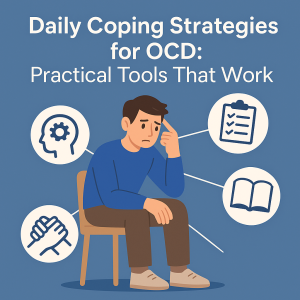
Daily Coping Strategies for OCD: Practical Tools That Work


Daily Coping Strategies for OCD: Practical Tools That Work

Daily Coping Strategies for OCD: Practical Tools That Work
Daily Coping Strategies for OCD

Daily Coping Strategies for OCD: Living with obsessive-compulsive disorder (OCD) can feel like an endless loop of unwanted thoughts and repetitive actions. The good news? With steady, daily coping strategies for OCD, you can retrain your brain, reduce anxiety, and reclaim your time.

Understanding OCD: The Basics of an Overactive Mind

Obsessive-compulsive disorder is a chronic mental health condition marked by obsessions—unwanted, intrusive thoughts—an d compulsions—repetitive actions aimed at easing the distress those thoughts create. It’s not simply about neatness or perfectionism; it’s about how the brain misfires around threat and uncertainty. Recognising OCD as a neurobiological condition (not a character flaw) helps shift the conversation from blame to strategy.

What Is Obsessive-Compulsive Disorder (OCD)?

OCD often traps people in a “fear–reassurance” loop. Intrusive thoughts spark anxiety; compulsions offer short-term relief but reinforce the loop, making the cycle stronger. Effective daily coping strategies for OCD target this loop so you can respond differently to uncertainty.

Common Symptoms and Thought Patterns

  • Contamination fears and excessive washing
  • Compulsive checking (locks, appliances, safety)
  • Counting, arranging, or symmetry rituals
  • Intrusive doubts about harm, morality, relationships, or identity

Without tools, these patterns can dominate your energy. With tools, they become manageable signals—not commands.

Why Daily Coping Strategies Matter for OCD Management

Neuroplasticity rewards repetition. Small, consistent actions—practised daily—teach your brain that intrusive thoughts can be tolerated without compulsions. Like strength training, little sets done often create durable change.

The Role of Routine and Structure

Routine reduces decision fatigue and limits rumination time. Anchor your day with predictable touchpoints: wake-up, meals, movement, reflection, and sleep. A simple framework gives your mind fewer openings to spiral.

Daily Coping Strategies for OCD: Practical Tools That Work (Quick Start)

  1. Two-minute breathing reset on waking and before sleep.
  2. One planned micro-exposure (ERP) that you can realistically complete.
  3. Response prevention commitment: identify one ritual you’ll skip today.
  4. 5-minute thought record: evidence-for/against a sticky thought.
  5. Movement: 20 minutes of walking or light cardio.
  6. Digital boundary: one screen-free block (30–60 minutes).
  7. Sleep window: consistent bedtime and wake time.
  8. Gratitude 3: write three things that went right today.

Mindfulness-Based Techniques for OCD Relief

Mindfulness builds the skill of noticing thoughts without obeying them. You’re not trying to erase thoughts—only to change your relationship with them.

Breathing Exercises and Grounding Practices

  • Box breathing: inhale 4, hold 4, exhale 4, hold 4—repeat 4 cycles.
  • 5-4-3-2-1 grounding: name 5 things you see, 4 touch, 3 hear, 2 smell, 1 taste.

These skills create a pause between trigger and response, lowering the urge to ritualise.

Meditation and Mindful Observation

Try five minutes of breath awareness daily. When an intrusive thought appears, label it—“thinking,” “worrying,” “what-if”—and return to the breath. Thoughts are events, not orders.

Cognitive-Behavioral Tools: Reframing the OCD Cycle

CBT helps you see how thoughts, feelings, and behaviours interact. The gold-standard therapy for OCD within CBT is ERP—exposure and response prevention.

Exposure and Response Prevention (ERP)

ERP means gradually facing triggers while not performing the associated compulsion. Over time, your brain learns that anxiety peaks and falls on its own. Start small, track your steps, and celebrate completion—not perfection.

Cognitive Restructuring: Challenging Distorted Thoughts

  • Evidence check: What supports this thought? What contradicts it?
  • Perspective shift: What would I tell a friend with this fear?
  • Probability vs. possibility: Is it likely, or just imaginable?

Balanced thinking weakens the OCD loop and supports ERP work.

Lifestyle Adjustments That Support OCD Recovery

Exercise, Nutrition, and Sleep Hygiene

Movement stabilises mood; aim for 20–30 minutes most days. Favour balanced meals with complex carbs, lean proteins, and healthy fats to steady energy. Guard sleep with a regular schedule, a dark cool room, and a wind-down routine.

Digital Detox and Reducing Overstimulation

Notifications and doomscrolling spike uncertainty. Use app limits, batch notifications, and create screen-free zones (mornings, meals, 1 hour before bed).

Self-Compassion and Emotional Regulation Techniques

Journaling and Self-Affirmations

Externalise loops by writing them down. Pair with affirmations like: “I am not my thoughts,” “It’s okay to feel uncertain,” and “Progress over perfection.”

Using Gratitude to Shift Focus

End the day by recording three good things, however small. Over time, this nudges attention toward what’s working.

Professional and Social Support Systems

When to Seek Professional Help

If symptoms interfere with work, school, health, or relationships, seek a clinician trained in CBT/ERP. A reliable resource is the
International OCD Foundation.

Building a Reliable Support Network

Tell trusted people what helps (and what doesn’t). Consider peer support groups for accountability and shared wisdom.

Tools and Apps That Aid OCD Management

  • NOCD — therapy access and ERP guides.
  • Headspace / Calm — guided mindfulness and sleep tracks.
  • Daylio — mood and habit tracking to spot patterns.

Apps can’t replace therapy, but they reinforce daily practice and help you measure progress.

FAQs About OCD Daily Coping Strategies

Can OCD ever fully go away?
For many, symptoms become highly manageable with ERP and supportive habits, even if the vulnerability remains.
How often should I practice coping techniques?
Daily. Short, consistent repetitions build the strongest change.
Is medication necessary for everyone with OCD?
No. Some benefit from therapy alone; others do best with combined treatment. Work with a licensed professional.
How long does it take to see improvement?
Many people notice change after 8–12 weeks of steady CBT/ERP. Expect progress to be gradual.
What’s the best quick technique for calming intrusive thoughts?
Grounding plus paced breathing (like box breathing) creates a helpful pause before action.
Can lifestyle changes really impact OCD?
Yes—sleep, movement, nutrition, and digital boundaries lower baseline anxiety and support therapy.

Conclusion: Building a Sustainable OCD Coping Plan

OCD is persistent, but you are capable. By combining mindfulness, ERP, cognitive reframes, and supportive routines, you’ll chip away at the fear–reassurance cycle. Keep the daily actions small and consistent. Celebrate completions. And remember: help is available, and progress counts every single day.

External resource: International OCD Foundation.

Back to top ↑


Online Therapy for OCD


Online Therapy for OCD: Best Platforms Reviewed 2025 Guide

Online Therapy for OCD: Best Platforms Reviewed 2025 Guide
Online Therapy for OCD


Introduction: Understanding OCD and the Rise of Online Therapy

Online Therapy for OCD: Best Platforms Reviewed is more than a list—it’s a roadmap for getting evidence-based care. Obsessive-Compulsive Disorder (OCD) involves intrusive thoughts and repetitive behaviors that can disrupt daily life. The gold-standard treatment is Cognitive Behavioral Therapy (CBT), especially Exposure and Response Prevention (ERP). Yet access to trained specialists is uneven, waitlists are long, and stigma still keeps many from in-person care. Online care closes those gaps with flexible, private, and often more affordable options.

Benefits of Online Therapy for OCD

Accessibility and Convenience

Video sessions and secure messaging help you meet consistently, wherever you live. No commute, no waiting room, and easier scheduling increase follow-through.

Affordability and Cost Transparency

Subscription plans and tiered options can cost less than traditional visits. Clear pricing and the ability to change cadence (weekly/bi-weekly) make budgeting simpler.

Privacy, Comfort, and Reduced Stigma

Discussing intrusive thoughts can feel easier from home. Many people engage more openly in a familiar environment, which supports treatment progress.

Access to Specialists Anywhere

Matching tools connect you with ERP-trained clinicians even if none practice nearby.

How Online Therapy Works for OCD

CBT and Exposure & Response Prevention (ERP)

CBT helps identify unhelpful thought patterns. ERP then guides you to face triggers and resist compulsions, lowering anxiety over time through learning (habituation and inhibitory learning).

Video Sessions, Messaging, and Hybrid Models

Most platforms mix live sessions with between-session messaging for coaching and homework check-ins—ideal for ERP’s stepwise exercises.

What to Expect from an Online OCD Session

  • Assessment of symptoms and functional impacts
  • Collaborative hierarchy of exposures
  • Live coaching on ERP tasks and weekly homework
  • Progress tracking and plan adjustments

Top-Rated Online Therapy Platforms for OCD (2025 Edition)

1. BetterHelp — Best Overall Platform for OCD Support

Large therapist network, flexible scheduling, and asynchronous messaging. Great for people who want a quick start and broad clinician choice. Cons: not every clinician specializes in OCD—ask about ERP experience.

2. Talkspace — Great for Ongoing Text and Video Therapy

Daily messaging plus live sessions. Insurance integration on many plans. Cons: matching can take time; clarify ERP focus during intake.

3. NOCD — Specialized OCD Treatment Platform

Purpose-built for OCD with ERP protocols, coaching, and progress tools. Cons: may cost more than generalist apps; availability varies by region.

4. Brightside Health — Best for Combined Therapy and Medication

Integrates therapy with psychiatric evaluation and medication management when appropriate. Cons: medication availability varies by location.

5. Online-Therapy.com — Structured CBT for OCD

Self-guided CBT modules, worksheets, and coach feedback for budget-friendly structure. Cons: fewer live video options than full-service platforms.

Comparative Table: Features and Pricing of Top OCD Therapy Platforms

PlatformSpecializationTypical Starting Price*Therapy TypeBest For
BetterHelpGeneral mental health$65/weekMessaging + VideoOverall support
TalkspaceMessaging + live sessions$69/weekCBT, psychotherapyFrequent messaging
NOCDOCD-specific ERP$80/weekERP-based therapyOCD-focused care
BrightsideTherapy + medication$95/weekCBT + PsychiatryCombined treatment
Online-Therapy.comStructured CBT program$50/weekSelf-guided CBTBudget therapy

*Prices are indicative and may vary by plan, location, and promotions.

Choosing the Right Online Therapy Platform for Your OCD

Key Factors

  • Therapist qualifications: ask directly about ERP training and OCD caseload.
  • Cost & coverage: compare weekly vs. monthly plans and insurance options.
  • Format fit: video, messaging, or hybrid—pick what helps you stay consistent.

Personal Fit Checklist

  1. Do they provide ERP and exposure homework?
  2. Can I reach my clinician between sessions for coaching?
  3. Is switching therapists easy if needed?

Safety, Privacy, and Data Protection in Online Therapy

Choose platforms with HIPAA-compliant infrastructure, encrypted communications, and transparent privacy policies. Avoid unverified services and always confirm licensure.

Real User Experiences: What Clients Say

Many report better follow-through thanks to flexible scheduling and messaging support. Common challenges—like exposure discomfort—are addressed with gradual ERP steps and coach feedback.

Expert Tips for Maximizing Online OCD Therapy

  • Prepare 2–3 specific goals before session one.
  • Build a written exposure hierarchy and track daily reps.
  • Use a brief mood/urge journal to monitor change.
  • Communicate quickly if a plan isn’t working—adjustment is part of ERP.

Want an evidence primer? See the International OCD Foundation for ERP resources.

FAQs About Online Therapy for OCD

Is online therapy effective for OCD?
Yes. Online CBT and ERP can match in-person outcomes for many when delivered by trained clinicians and practiced consistently.
Can I get medication online for OCD?
Yes, through platforms with psychiatry. Availability and prescribing rules depend on your location.
How do I know if my therapist is qualified?
Verify licensure and ask about ERP experience. Reputable platforms list credentials and encourage switching if needed.
Is online therapy confidential?
Look for HIPAA-compliant services with encryption, access controls, and clear data policies.
How soon can I start therapy online?
Often within a few days of enrollment, depending on demand and your region.
What if I’m not satisfied with my therapist?
Most platforms let you change clinicians at no extra cost. Speak up early to optimize the fit.

Conclusion: The Future of OCD Treatment in the Digital Age

Online Therapy for OCD: Best Platforms Reviewed shows how accessible, private, and effective modern care can be. Whether you choose a specialized ERP platform like NOCD or a broad network like BetterHelp, the right fit pairs expert guidance with your consistency. With continued progress in digital health, OCD treatment is becoming more tailored—and more within reach—than ever.


Disclosure: Information here is educational and not a substitute for medical advice. If you’re in crisis, contact your local emergency number or a suicide prevention hotline immediately.


Best Medication For OCD


Best Medication for OCD: Comprehensive Guide to Effective Treatment in 2025

Living with obsessive-compulsive disorder is hard—but help is real. This friendly guide explains medication for OCD in plain English: what works, how it works, and how to start safely.

Best Medication for OCD: Comprehensive Guide to Effective Treatment in 2025
Best Medication for OCD


Talk to a qualified clinician before starting, stopping, or changing any medication.
Obsessive-Compulsive Disorder (OCD) involves unwanted thoughts (obsessions) and repetitive behaviours (compulsions). For many, therapy alone is enough; for others, adding medication for OCD reduces symptom intensity so daily life becomes manageable again.Modern care treats OCD as a neurobiological condition. Adjusting brain chemistry with the right medicine can calm intrusive thought loops and make therapy stick.

Types of Medication Used to Treat OCD

Selective Serotonin Reuptake Inhibitors (SSRIs)

SSRIs are the first-line, evidence-based option. They raise serotonin signalling and are usually taken once daily.

Common SSRIs Prescribed for OCD

  • Fluoxetine (Prozac)
  • Sertraline (Zoloft)
  • Paroxetine (Paxil)
  • Fluvoxamine (Luvox)
  • Citalopram (Celexa)
  • Escitalopram (Lexapro)

How SSRIs Help Manage Symptoms

Benefits build gradually. Many people notice change in 4–6 weeks; full effect often needs up to 12 weeks at a therapeutic dose.

Serotonin–Norepinephrine Reuptake Inhibitors (SNRIs)

When SSRIs aren’t enough or aren’t tolerated, clinicians may try an SNRI that influences both serotonin and norepinephrine.

Examples & When They’re Used

  • Venlafaxine (Effexor XR)
  • Duloxetine (Cymbalta)

Though primarily licensed for depression/anxiety, they can help in some treatment-resistant OCD cases under specialist care.

Antipsychotic Medications as Augmentation

When Are They Recommended?

For partial response to an SSRI, a low-dose antipsychotic—commonly risperidone or aripiprazole—may be added. These target dopamine pathways and are used as add-ons, not as stand-alone medicines for OCD.

At-a-Glance Comparison

ClassExamplesTypical RoleTime to Effect
SSRIFluoxetine, Sertraline, Fluvoxamine, Paroxetine, Citalopram, EscitalopramFirst-line monotherapy4–12 weeks
SNRIVenlafaxine, DuloxetineAlternative when SSRI not effective/tolerated4–12 weeks
Antipsychotic (add-on)Risperidone, AripiprazoleAugmentation after partial SSRI responseOften within 2–6 weeks

How OCD Medications Work in the Brain

The Role of Serotonin & Other Neurotransmitters

OCD is linked to signalling differences in cortico-striatal-thalamo-cortical circuits. By enhancing serotonin (and sometimes norepinephrine) signalling, medications dampen the “error alarm” that fuels obsessive loops.

Why Balancing Chemistry Matters

Once the volume on intrusive thoughts is turned down, Exposure and Response Prevention therapy becomes easier to practise, creating durable gains.

Side Effects of OCD Medications

Common Short-Term Effects

  • Nausea or digestive upset
  • Insomnia or daytime fatigue
  • Mild headache
  • Appetite or weight changes
  • Reduced libido or sexual side effects

Long-Term Considerations & Monitoring

Schedule regular check-ins with your prescriber. Never stop an SSRI abruptly—tapers prevent discontinuation symptoms. Report any new or worsening mood, and review potential interactions (for example, with other serotonergic drugs).

Comparing OCD Medications: Which Works Best?

Efficacy by Symptom Severity

For mild–moderate OCD, an SSRI plus ERP is usually sufficient. Severe or treatment-resistant cases may benefit from dose optimization, a switch to another SSRI/SNRI, or augmentation.

Personalised Plans & Dosing

Response varies by genetics, prior treatment, comorbidities, and adherence. Clinicians titrate gradually to reach an evidence-based dose while balancing side effects.

Natural and Non-Pharmaceutical Supports

CBT with Exposure & Response Prevention (ERP)

ERP helps you face feared cues without performing rituals, retraining the brain’s alarm system. It pairs well with medication for OCD and has strong long-term results.

Supplements & Lifestyle

  • Regular aerobic exercise
  • Consistent sleep schedule
  • Mindfulness practice
  • Discuss any supplements (e.g., omega-3) with your clinician to avoid interactions.

How to Start Medication Safely

Consult a Qualified Prescriber

Share your medical history, all medicines/supplements, and goals. Ask about dose ranges, timelines, and follow-up.

What to Expect in the First Few Weeks

  1. Mild side effects may appear and often fade.
  2. Benefits build gradually; consistency matters.
  3. Keep scheduled reviews to adjust dose if needed.

Helpful resource: National Institute of Mental Health (NIMH) – OCD

FAQs About OCD Medication

1) What is the best medication for OCD?

SSRIs (fluoxetine, sertraline, fluvoxamine, paroxetine, citalopram, escitalopram) are first-line. The “best” option is the one you tolerate and can take consistently at an effective dose.

2) Can you treat OCD without medication?

Yes—ERP therapy can be very effective. Many people still choose a combination of ERP and medication for faster, stronger relief.

3) How long does it take for medication to work?

Plan for 4–6 weeks for early changes and up to 12 weeks for full benefit after reaching a therapeutic dose.

4) Are these medicines safe long-term?

With clinical monitoring, SSRIs are generally safe long-term. Review risks/benefits periodically with your prescriber.

5) What should I do if medication doesn’t work?

Don’t give up. Options include dose optimisation, switching agents, or augmentation with a low-dose antipsychotic like risperidone or aripiprazole.

6) Can I combine therapy with medication?

Absolutely. The combination of ERP plus medication for OCD often provides the most durable improvement.

Conclusion: Finding the Right Balance

There’s no one-size-fits-all plan. With a personalised mix of medication for OCD, ERP therapy, and healthy routines, most people can dramatically improve their quality of life. Partner with your clinician, stay consistent, and track progress—you’ve got this.

Disclaimer: This article is for educational purposes and is not a substitute for personalised medical advice.


Exposure and Response Prevention (ERP)


Exposure and Response Prevention (ERP): The Gold Standard for OCD Treatment

Introduction to OCD: Understanding the Disorder

Obsessive-Compulsive Disorder (OCD) is far more than a desire for cleanliness or order—it’s a chronic condition marked by intrusive thoughts (obsessions) and repetitive behaviors (compulsions). These patterns can consume hours daily and severely interfere with daily life. ERP helps individuals confront fears head-on, teaching the brain that anxiety fades naturally without compulsions.

The Evolution of OCD Treatment: From Psychoanalysis to ERP

OCD treatment has evolved from early psychoanalysis to behavior-based therapies. Behaviorists like Stanley Rachman and Victor Meyer developed exposure-based methods that addressed compulsive behavior directly. ERP, a specialized branch of CBT, became the gold standard through decades of evidence-based success.

What Is Exposure and Response Prevention (ERP)?

Exposure and Response Prevention (ERP) is a structured form of therapy helping individuals face fears (exposure) while resisting compulsions (response prevention). The goal is not to remove anxiety but to retrain the brain to tolerate discomfort and uncertainty.

Key Components of ERP Therapy

  • Trigger Identification: Recognizing fear-provoking thoughts or situations.
  • Fear Hierarchy Creation: Ranking triggers from least to most distressing.
  • Gradual Exposure: Facing fears progressively.
  • Response Prevention: Resisting compulsions during exposures.
  • Reflection: Reviewing progress and reinforcing success.

How ERP Differs from Other OCD Treatments

Treatment TypeFocusEffectiveness for OCD
Talk TherapyInsight and emotional supportModerate
Medication (SSRIs)Reduce anxiety symptomsModerate
ERP TherapyRewires fear response cycleHigh (Gold Standard)

Benefits of ERP for OCD Recovery

  • Reduced compulsive behaviors and intrusive thoughts
  • Improved confidence and emotional regulation
  • Lower relapse rates compared to medication-only treatment
  • Restored sense of control and normalcy

Challenges and Misconceptions About ERP

Is ERP Too Intense or Stressful?

ERP is carefully structured to match the patient’s readiness. It’s collaborative, safe, and empowering when guided by a trained therapist.

Common Myths About ERP

  • ERP is forced exposure — False: Clients control the pace.
  • ERP removes anxiety — False: It builds tolerance for it.
  • ERP is only for severe OCD — False: It works for all severities.

What to Expect During ERP Therapy

Sessions typically include reviewing previous exposures, conducting in-session practices, and planning new exercises. Success is measured by consistent effort, not perfection.

ERP for Different Types of OCD

  • Contamination OCD: Touching feared objects and refraining from washing.
  • Harm/Intrusive Thought OCD: Facing unwanted thoughts without reassurance.
  • Checking/Counting/Religious OCD: Learning to tolerate uncertainty without rituals.

Self-Help and ERP: Can You Practice It Alone?

ERP apps like NOCD or “OCD Challenge” can help individuals practice exposures with guidance. However, severe OCD should always be treated with professional support.

Real-Life Success Stories of ERP

Studies show 60–80% of ERP participants experience significant improvement. Many describe ERP as life-changing, allowing them to live freely despite OCD triggers.

Integrating ERP with Holistic Practices

  • Mindfulness: Observe intrusive thoughts without judgment.
  • Physical Health: Balanced diet, regular exercise, and sleep enhance results.
  • Support Groups: Join communities at iocdf.org.

The Future of ERP and OCD Treatment

Technological advances like Virtual Reality ERP and neurofeedback are expanding accessibility. ERP continues to evolve, integrating digital tools and neuroscience-based improvements.

FAQs About Exposure and Response Prevention (ERP)

  1. Is ERP safe? Yes—when guided by a trained therapist.
  2. How long does ERP take? Usually 12–20 weeks depending on severity.
  3. Can medication help? Yes, SSRIs often complement ERP.
  4. Does ERP work for children? Yes, pediatric ERP has high success rates.
  5. Can ERP cure OCD? ERP doesn’t “cure” OCD, but it offers long-term management and recovery.

Conclusion: Why ERP Remains the Gold Standard

Exposure and Response Prevention (ERP) remains the most evidence-based treatment for OCD. It empowers individuals to face fears, resist rituals, and regain control of their lives. With expert guidance and consistency, ERP can transform anxiety into freedom.


Written by: Mental Health Editorial Team | Source: International OCD Foundation

Cognitive Behavioral Therapy


Cognitive Behavioral Therapy: The Ultimate Guide to Transforming Your Mind and Behavior

Cognitive Behavioral Therapy (CBT) is one of the most widely practiced and scientifically supported psychotherapies in the world. It helps individuals understand how their thoughts influence emotions and behaviors—and teaches strategies to change them for better mental health and overall well-being.


What Is Cognitive Behavioral Therapy (CBT)?

Cognitive Behavioral Therapy is a structured, evidence-based talk therapy that helps people identify and challenge unhelpful thought patterns. It focuses on the idea that how we think affects how we feel and behave.
By learning to recognize and reframe negative thinking, people can reduce emotional distress and improve coping skills.


A Brief History of CBT

CBT was developed in the 1960s by Dr. Aaron T. Beck, who noticed that depressed patients often had streams of negative thoughts. Beck’s work, alongside Albert Ellis (founder of Rational Emotive Behavior Therapy), laid the foundation for what is now a globally recognized, effective therapy model.


The Science Behind CBT

CBT is supported by decades of research and clinical trials. Studies show that CBT can help rewire neural pathways, leading to lasting positive changes in emotional processing.
Brain scans even show measurable differences after CBT, particularly in areas linked to anxiety, mood, and emotional control.


Core Principles of Cognitive Behavioral Therapy

The Cognitive Triangle

CBT is built on the cognitive triangle, which illustrates how thoughts, emotions, and behaviors are interconnected.
For example:

  • A thought like “I’m a failure” can cause sadness (emotion) and withdrawal (behavior).
  • Changing that thought to “I made a mistake, but I can learn from it” creates healthier emotional and behavioral outcomes.

Identifying and Challenging Negative Thoughts

CBT teaches people to identify cognitive distortions, or faulty ways of thinking, such as:

  • Catastrophizing (“Everything is ruined!”)
  • Overgeneralizing (“I always fail.”)
  • Mind reading (“They must think I’m stupid.”)

Recognizing these distortions allows people to challenge and replace them with realistic, balanced thoughts.

Cognitive Restructuring

This process involves actively questioning and reframing negative beliefs.
For example, instead of “I can’t handle this,” one might learn to think, “This is tough, but I’ve handled challenges before.”


Common CBT Techniques and Tools

The ABC Model

This classic model stands for:

  • A – Activating Event: What happened?
  • B – Belief: What do I think about it?
  • C – Consequence: How do I feel or act as a result?

Changing the belief at “B” can completely alter the emotional outcome at “C.”

Exposure Therapy

For those with anxiety, phobias, or PTSD, CBT may include gradual exposure to feared situations until they become manageable. Over time, this reduces avoidance and anxiety responses.

Behavioral Experiments and Journaling

Therapists often assign homework—like journaling thoughts or tracking emotions—to reinforce new skills.
This makes therapy interactive, helping people apply lessons from sessions in their daily lives.


Benefits of Cognitive Behavioral Therapy

Short-Term Benefits

  • Reduced anxiety and depression symptoms
  • Improved emotional awareness
  • Enhanced problem-solving skills

Long-Term Benefits

  • Better self-esteem
  • Improved relationships
  • Lifelong resilience and coping mechanisms

CBT vs. Other Therapies

Unlike psychoanalysis, which explores the past, CBT focuses on present problems and actionable solutions. It’s structured, measurable, and time-limited—often producing results in just 8–16 sessions.


Applications of CBT for Mental Health Disorders

CBT for Anxiety

CBT helps break the cycle of worry by teaching people to question anxious predictions and face fears directly. Gradual exposure and relaxation techniques are commonly used.

CBT for Depression

Depression feeds on negative thinking. CBT helps people identify self-defeating beliefs (“I’ll never get better”) and replace them with realistic, hopeful ones.

CBT for PTSD and OCD

Exposure therapy and cognitive restructuring help people process trauma and reduce compulsive behaviors. Over time, individuals regain control of their thoughts and actions.

CBT for Substance Abuse

CBT addresses triggers and teaches alternative coping strategies, helping individuals resist cravings and prevent relapse.


The CBT Process: What to Expect

Session Structure

Each session lasts 45–60 minutes and includes:

  1. Reviewing progress or homework
  2. Discussing challenges
  3. Practicing new cognitive and behavioral techniques
  4. Setting goals for the next session

Goal Setting and Progress Tracking

Clients and therapists create measurable goals (SMART goals: specific, measurable, achievable, relevant, and time-bound).
Progress is tracked weekly to maintain motivation and focus.

Therapist–Client Collaboration

CBT is a team effort. The therapist acts as a coach, while the client practices learned techniques between sessions.


Who Can Benefit from CBT?

Adults, Teens, and Children

CBT is effective across age groups. It helps:

  • Adults manage stress, work anxiety, and depression.
  • Teens handle social pressure and academic challenges.
  • Children learn emotional regulation through age-appropriate exercises.

Couples and Families

CBT for relationships focuses on communication, understanding, and breaking negative interaction cycles.


Online and Self-Help CBT Options

Online CBT (eCBT)

Online programs and virtual therapy sessions provide convenient access to CBT tools and professional guidance. Research shows online CBT is equally effective as in-person therapy for many conditions.

CBT Apps and Digital Tools

Apps such as Woebot, MoodMission, and CBT Thought Diary offer self-guided exercises and journaling options that reinforce therapy concepts daily.


Effectiveness of CBT

Scientific Research

CBT is one of the most thoroughly researched psychotherapies.
A meta-analysis in The Lancet Psychiatry revealed significant symptom reduction for over 60% of patients with anxiety and depression.

Success Stories

People who complete CBT often report life-changing results—greater confidence, emotional balance, and improved relationships.
CBT doesn’t just relieve symptoms; it teaches tools for lifelong resilience.


Challenges and Limitations of CBT

When CBT May Not Be Ideal

CBT may not be suitable for individuals with:

  • Severe cognitive impairments
  • Complex trauma requiring deeper emotional exploration
  • Difficulty engaging in reflective tasks

In such cases, therapies like DBT (Dialectical Behavior Therapy) or EMDR may be better alternatives.

Common Misconceptions

CBT doesn’t “ignore emotions.” Instead, it helps people understand their emotions logically and compassionately.
It’s not a quick fix—but consistent effort brings lasting change.


How to Find a Qualified CBT Therapist

Credentials to Look For

Seek therapists certified by reputable organizations like:

  • The Beck Institute for Cognitive Behavioral Therapy
  • The Association for Behavioral and Cognitive Therapies (ABCT)

Questions to Ask Before Starting

  • What kind of CBT do you practice?
  • How long will therapy last?
  • Do you provide homework or self-guided exercises?
  • How do we measure progress?

Frequently Asked Questions About CBT

1. How long does CBT take?
Most people experience noticeable improvement in 6–12 sessions.

2. Can CBT be done without a therapist?
Yes. Many effective self-help books, workbooks, and online programs are available.

3. Is CBT effective for severe depression or trauma?
Yes—but it’s often combined with medication or other therapies.

4. What’s the difference between CBT and DBT?
CBT focuses on changing thinking patterns; DBT emphasizes emotional regulation and mindfulness.

5. Are there side effects of CBT?
There are no physical side effects, though emotional discomfort may arise during self-reflection.

6. Is CBT covered by insurance?
In many countries, CBT is included under mental health coverage. Always confirm with your provider.


Conclusion: Empowering Change Through Cognitive Behavioral Therapy

Cognitive Behavioral Therapy isn’t just about managing symptoms—it’s about transforming the way you think, feel, and live.
Through awareness, restructuring, and behavioral change, CBT gives people lifelong tools to navigate stress, anxiety, and negative thinking patterns.

For more information, visit the American Psychological Association’s CBT resource page.


Tags: Cognitive Behavioral Therapy, CBT, Mental Health, Depression, Anxiety, Therapy, Psychology, Behavioral Scienc

How OCD Affects the Brain


How OCD Affects the Brain: Science Behind the Disorder

How OCD Affects the Brain: Science Behind the Disorder
How OCD Affects the Brain

How OCD Affects the Brain: Disorder (OCD) is often seen through the lens of repetitive behaviors and intrusive thoughts. But behind these symptoms lies a fascinating story of brain chemistry, overactive neural circuits, and the science of habit formation.

This in-depth guide explores how OCD affects the brain, uncovering the scientific explanations behind obsessions, compulsions, and the breakthroughs that are transforming treatment and understanding.


Introduction to OCD and Brain Function

What is OCD?

OCD is a mental health condition marked by obsessions (intrusive, unwanted thoughts, urges, or images) and compulsions (repetitive behaviors or mental rituals) that a person feels driven to perform to ease distress or prevent harm.

The Brain’s Role in Mental Health

Our brain governs every thought, emotion, and habit. When circuits responsible for risk assessment, decision-making, and emotional regulation go awry, patterns like OCD emerge. Understanding the neurological basis of OCD helps us appreciate why it’s not about “willpower,” but about brain function.


Brain Regions Involved in OCD

The Orbitofrontal Cortex (OFC)

The OFC helps evaluate risks and make decisions. In OCD, this region is overactive, continually signaling that something might be wrong. This hyperactivity makes intrusive thoughts feel urgent and impossible to dismiss.

How Overactivity Fuels Obsessive Thoughts

  • The OFC exaggerates minor concerns into serious threats.
  • It triggers repeated mental checking (“Did I lock the door?”).
  • It keeps the brain locked in constant alert mode.

The Anterior Cingulate Cortex (ACC)

The ACC detects errors and signals when something needs correction. In OCD, it fires too frequently, giving rise to the chronic feeling that “something isn’t quite right.”

Error Detection and the “Not-Just-Right” Feeling

The ACC’s overactivity means tasks never feel complete. Even when someone knows they’ve locked the door, their brain keeps demanding reassurance.


The Basal Ganglia

Located deep within the brain, the basal ganglia control habits and automatic actions. In OCD, this structure becomes trapped in feedback loops, reinforcing repetitive behaviors.

Compulsions and Habit Loops

  • Compulsions relieve anxiety temporarily, rewarding the behavior.
  • Over time, rituals become automatic responses to anxiety triggers.

The Thalamus

The thalamus acts as a relay station, filtering information before sending it to higher brain areas. In OCD, it fails to filter properly, letting through excessive “warning” signals that feed the obsession–compulsion cycle.


Neurotransmitters and OCD

Serotonin Imbalance

Serotonin helps regulate mood and anxiety. Low serotonin function is strongly linked to OCD. That’s why Selective Serotonin Reuptake Inhibitors (SSRIs)—like fluoxetine or sertraline—can reduce OCD symptoms by restoring balance.

Dopamine’s Role in Reward and Compulsions

Dopamine drives the brain’s reward system. When someone performs a compulsion (like checking or cleaning), dopamine releases a small burst of relief, reinforcing the habit loop—even though it’s harmful in the long run.

Glutamate Dysregulation

Glutamate is the brain’s primary excitatory neurotransmitter. Too much glutamate can overstimulate neural circuits, a pattern often seen in OCD brains. Researchers are now developing medications to modulate glutamate activity in treatment-resistant cases.


Brain Circuitry Malfunctions in OCD

The Cortico-Striato-Thalamo-Cortical (CSTC) Loop

This major brain circuit links the orbitofrontal cortex, basal ganglia, thalamus, and anterior cingulate cortex. In OCD, the CSTC loop is overactive, creating a continuous cycle of obsessive thoughts and compulsive behaviors.

Hyperconnectivity and Overactive Brain Circuits

Brain imaging (fMRI, PET scans) reveals that OCD brains have hyperconnected neural pathways, particularly in regions responsible for fear, error detection, and habit formation. This “overcommunication” traps the brain in repetitive patterns.


How OCD Brains Differ from Non-OCD Brains

Brain Imaging Studies (fMRI and PET Scans)

Imaging studies show excessive activity in the OFC, ACC, and basal ganglia when OCD patients experience triggers. These regions remain active longer than in non-OCD individuals, explaining why intrusive thoughts persist.

Structural vs. Functional Differences

  • Structural differences: Slight changes in gray matter volume in areas controlling impulse and habit.
  • Functional differences: Overactivation of circuits responsible for error detection and poor inhibition of intrusive thoughts.

Scientific Theories on OCD’s Origins

Genetic Influences

OCD often runs in families. Having a close relative with OCD increases risk, suggesting genetics play a key role. Researchers have identified several genes affecting serotonin and dopamine regulation linked to OCD susceptibility.

Autoimmune and PANDAS Hypothesis

In some children, sudden-onset OCD follows a streptococcal infection. This is known as PANDAS (Pediatric Autoimmune Neuropsychiatric Disorders Associated with Streptococcal infections), where antibodies mistakenly attack brain tissue, causing OCD-like symptoms.

Trauma and Environmental Factors

Traumatic or stressful life events can trigger OCD symptoms in those genetically predisposed. Chronic stress can also strengthen obsessive patterns in the brain.


How OCD Symptoms Manifest from Brain Dysfunction

Why Obsessions Become Sticky

Overactive regions like the OFC and ACC exaggerate danger signals, making harmless thoughts feel catastrophic. The brain’s “alarm” fails to turn off, trapping thoughts in a repetitive cycle.

Why Compulsions Provide Temporary Relief

Performing a compulsion reduces anxiety temporarily, releasing dopamine and calming the overactive circuits. Unfortunately, this reinforces the pattern, teaching the brain that rituals are necessary for relief.


Treatment Insights from Brain Science

Cognitive Behavioral Therapy (CBT) and Exposure and Response Prevention (ERP)

ERP, a branch of CBT, helps retrain the brain by gradually exposing patients to fears while preventing the compulsive response. Over time, the brain learns that anxiety naturally subsides without rituals—a process known as habituation.

Medication and Neurochemical Adjustments

  • SSRIs: Restore serotonin balance and reduce obsessive thinking.
  • SNRIs & Glutamate-modulating drugs: Used in treatment-resistant cases.

Deep Brain Stimulation (DBS) and Neurosurgery

For severe OCD unresponsive to therapy or medication, Deep Brain Stimulation (DBS) can help. Electrodes implanted in brain circuits regulate abnormal activity, offering relief to some individuals.


Lifestyle, Brain Health, and OCD Management

Exercise and Neuroplasticity

Exercise releases neurochemicals that improve mood, reduce anxiety, and enhance neuroplasticity—the brain’s ability to form new, healthier connections.

Mindfulness and Brain Rewiring

Mindfulness teaches people to observe thoughts without reacting to them. Studies show mindfulness reduces activity in the OFC and ACC, helping the brain disengage from obsessive loops.


Future Research in OCD and Brain Science

Neuroimaging Advances

Emerging imaging techniques now allow researchers to observe OCD circuits in real time, enabling personalized treatments based on each individual’s unique brain patterns.

Personalized Medicine Approaches

By combining genetic, neuroimaging, and biochemical data, scientists aim to create tailored treatment plans for each patient—reducing trial-and-error and improving outcomes.


FAQs on OCD and the Brain

1. Is OCD a brain disease or a mental illness?
OCD is both—it’s a mental health condition rooted in measurable brain dysfunctions, particularly in the CSTC loop.

2. Can brain scans diagnose OCD?
Not yet. While imaging reveals common patterns, diagnosis still relies on clinical evaluation and symptom history.

3. Does OCD damage the brain over time?
OCD doesn’t physically damage the brain. However, chronic stress and anxiety can impair overall brain function and well-being.

4. Can OCD be cured by fixing neurotransmitters?
Balancing neurotransmitters can help manage symptoms, but long-term recovery requires retraining brain circuits through therapy like ERP.

5. Why do compulsions feel rewarding?
Compulsions activate dopamine reward pathways, giving a short-term sense of relief that reinforces the behavior.

6. Are children’s OCD brains different from adults’?
Yes. In children—especially those with PANDAS—basal ganglia dysfunction is more common, while adults often show stronger OFC and ACC hyperactivity.


Conclusion: Understanding the OCD Brain

OCD isn’t about being “too organized” or “too clean.” It’s a brain-based disorder driven by hyperactive neural circuits and chemical imbalances. The good news is that the brain is plastic—it can change.

Therapies like ERP, medications such as SSRIs, and brain-based techniques like DBS all work by calming and rewiring these overactive circuits.

The more we understand how OCD affects the brain, the more effectively we can treat it—and the closer we come to breaking the cycle of obsession and compulsion for good.


External Resource:
For more information, visit the International OCD Foundation (IOCDF)


Understanding Obsessive-Compulsive Disorder (OCD

Understanding Obsessive-Compulsive Disorder (OCD)

Understanding Obsessive-Compulsive Disorder (OCD) is a mental health condition that affects millions of individuals globally. It is characterized by recurring, unwanted thoughts (obsessions) and repetitive behaviors (compulsions) that individuals feel compelled to perform. This can lead to significant distress and disruption in daily life.

Understanding Obsessive-Compulsive Disorder (OCD

How OCD Therapy Works

Therapeutic interventions play a crucial role in helping individuals manage their OCD symptoms. At our practice, we offer evidence-based therapy options that are tailored to fit each patient’s unique needs. The two primary therapies we utilize are Cognitive Behavioral Therapy (CBT) and Exposure and Response Prevention (ERP).

Cognitive Behavioral Therapy (CBT)

CBT is a widely recognized and effective treatment for OCD. It involves:

  • Identifying Negative Thoughts: Patients learn to recognize the negative thought patterns that contribute to their compulsive behaviors.
  • Challenging Distorted Beliefs: CBT helps individuals challenge and reframe their distorted thoughts, reducing their anxiety.
  • Developing Coping Strategies: Patients acquire coping techniques to manage their obsessions without resorting to compulsions.

Exposure and Response Prevention (ERP)

ERP is a specialized form of CBT that is particularly effective for OCD. It focuses on:

  • Gradual Exposure: Patients are gradually exposed to the sources of their anxiety in a controlled environment.
  • Resisting Compulsions: During exposure, individuals learn to resist the urge to engage in compulsive behaviors, reinforcing their ability to cope with anxiety.
  • Building Tolerance: Over time, the goal is to help patients build tolerance to their anxiety triggers without resorting to compulsions.

Personalized Treatment Plans

Every individual’s experience with OCD is unique, which is why we emphasize creating personalized treatment plans. Factors considered in treatment include:

  • The severity of symptoms
  • Individual triggers
  • Co-occurring mental health issues
  • Personal goals and preferences

Incorporating these factors ensures a holistic approach that addresses not just OCD but also other aspects of the individual’s mental health.

Supportive Environment

Our clinic provides a supportive and professional environment conducive to healing. We believe that:

  • Empathy is Key: A compassionate setting helps patients feel safe and understood.
  • Open Communication: Encouraging dialogue between therapist and patient fosters trust and makes it easier for patients to share their experiences.
  • Family Involvement is Beneficial: Educating family members about OCD can provide a better support system for individuals seeking treatment.

Useful Tips for Managing OCD

  • Practice Mindfulness: Mindfulness techniques can help individuals stay grounded and reduce anxiety.
  • Establish Routines: Having a structured daily routine may provide comfort and reduce feelings of chaos.
  • Stay Informed: Understanding OCD can empower individuals to recognize their symptoms and seek timely intervention.

Moving Forward with Treatment

Effective OCD therapy is not a one-size-fits-all approach. By utilizing treatments like CBT and ERP, we empower individuals to regain control of their lives. Together, we can work towards improving your quality of life and helping you develop effective coping strategies.

You cannot copy content of this page