Table of Contents
ToggleUnderstanding OCD Thought Loops — The Root of the Cycle
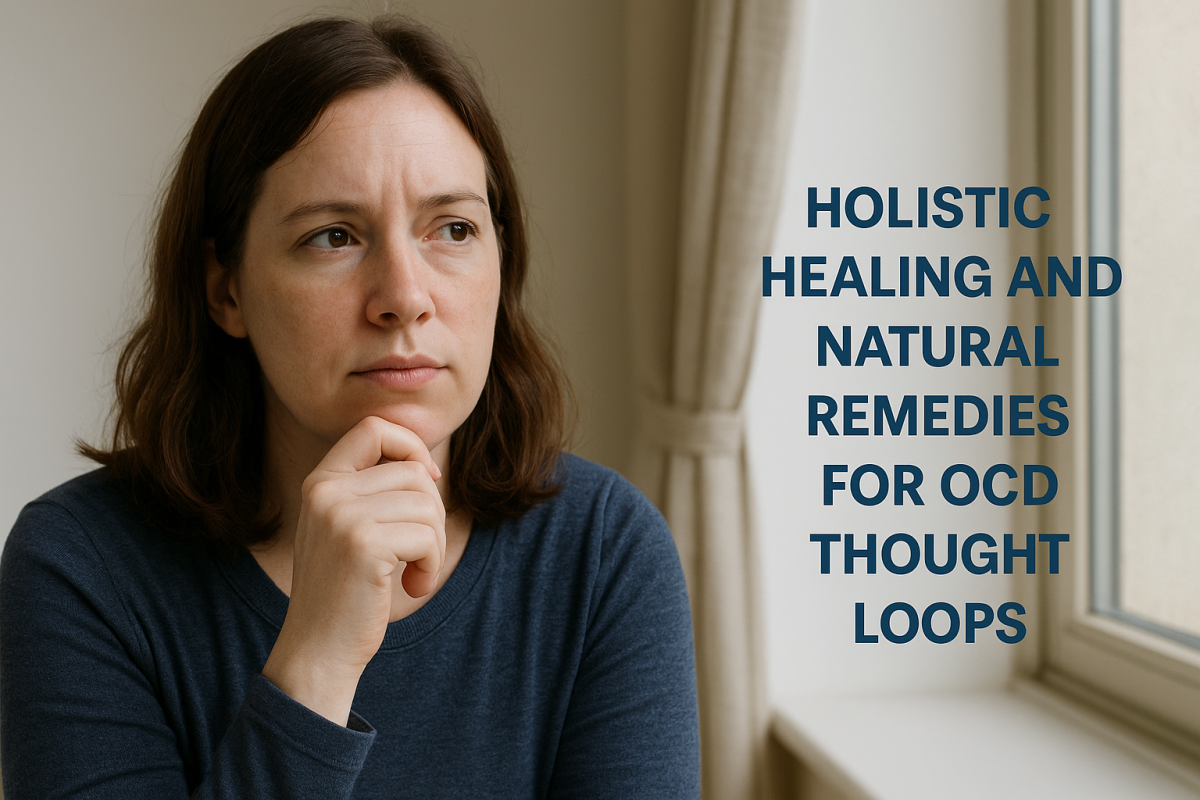
Obsessive-Compulsive Disorder (OCD) often manifests through repetitive thought loops—persistent mental cycles that create anxiety, guilt, or self-doubt. These thought patterns can feel impossible to escape, making everyday tasks emotionally exhausting.
Holistic healing offers a different approach. Instead of simply suppressing symptoms, it addresses the root causes—from brain chemistry and emotional regulation to lifestyle and energy balance. This perspective recognizes OCD as not just a mental condition, but a mind-body-spirit imbalance.
What Are OCD Thought Loops and Why They Persist
OCD thought loops are repetitive mental patterns triggered by intrusive thoughts. These loops often involve “what if” scenarios, compulsive analysis, or mental checking. The brain becomes trapped in a feedback loop of anxiety and temporary relief, reinforcing the behavior.
From a holistic viewpoint, thought loops persist due to imbalances in the nervous system and unresolved emotional tension. When cortisol and adrenaline dominate, the brain struggles to differentiate between real and perceived threats.
The Science Behind Obsessive-Compulsive Thought Patterns
Recent studies show that OCD involves dysregulation in the orbitofrontal cortex and basal ganglia, areas responsible for decision-making and habit formation. Low serotonin levels and heightened activity in fear-related pathways also play a role.
Holistic healing complements medical treatment by restoring neurotransmitter balance naturally, supporting nervous system regulation, and promoting mindfulness to retrain thought responses.
The Mind-Body Connection in Holistic Healing
How Emotional Energy Influences Thought Repetition
Emotions act as energetic frequencies that influence how thoughts circulate. When emotions like fear or guilt dominate, thought patterns become denser and repetitive. Practices such as mindful breathing or energy grounding help release trapped energy, breaking the emotional-mental loop that fuels OCD symptoms.
Balancing Neurochemistry Naturally: Serotonin, Dopamine, and Cortisol
Foods rich in tryptophan (like nuts, seeds, and oats) help increase serotonin. Regular exercise boosts dopamine, enhancing motivation and reducing compulsive urges. Additionally, meditation and herbal adaptogens like ashwagandha and rhodiola lower cortisol, calming the overactive stress response that fuels obsessive thoughts.
Top Natural Remedies To Reduce OCD Thought Loops
1. Mindfulness Meditation and Grounding Practices
Mindfulness teaches awareness of thoughts without attachment or judgment. Studies show that consistent mindfulness reduces compulsive thinking by increasing activity in the prefrontal cortex—the part of the brain that governs rational thought.
Grounding techniques, such as focusing on the five senses or deep belly breathing, bring attention back to the present moment, short-circuiting the thought loop before it spirals.
2. Herbal Supplements and Adaptogens for Calm
Nature offers potent remedies for anxiety and intrusive thoughts:
Ashwagandha: Stabilizes cortisol and promotes resilience.
Rhodiola Rosea: Boosts mental clarity and reduces fatigue.
Bacopa Monnieri: Enhances cognitive flexibility and reduces overthinking.
Chamomile and Lavender: Gentle herbal relaxants that ease tension and promote rest.
(Always consult a healthcare professional before adding supplements.)
3. Aromatherapy and Essential Oils for Mental Clarity
Aromatherapy engages the limbic system, the brain’s emotional center. Oils like frankincense, lavender, and bergamot promote tranquility and cognitive clarity. Diffusing these oils during meditation enhances their effects and can help anchor the mind during moments of obsessive thinking.
4. Diet and Nutrition: Healing the Gut-Brain Axis
The gut microbiome influences serotonin production and overall brain health. A diet rich in probiotics, fiber, and omega-3 fatty acids supports a balanced gut environment. Avoiding processed sugars, caffeine, and artificial additives can prevent mood fluctuations that trigger obsessive thought cycles.
5. Yoga, Breathwork, and Somatic Movement
Yoga harmonizes body and mind by integrating movement with controlled breathing. Specific poses like Child’s Pose, Forward Fold, and Legs-Up-the-Wall stimulate the parasympathetic nervous system, which slows racing thoughts.
Breathwork practices like box breathing or alternate nostril breathing (Nadi Shodhana) calm neural overactivity and create space between thoughts, reducing the compulsion to engage with them.
6. Journaling, Art, and Creative Outlets as Emotional Release
Creativity transforms mental energy into expression. Journaling helps externalize obsessive thoughts, turning chaos into clarity. Art therapy and music provide similar release, helping individuals move stuck emotions from the subconscious into conscious awareness.
Integrating Holistic Practices with Therapy
Cognitive Behavioral Therapy (CBT) Meets Mindfulness
CBT remains one of the most effective treatments for OCD. When paired with mindfulness, it helps individuals observe rather than engage with intrusive thoughts, reducing reactivity and anxiety.
Exposure and Response Prevention (ERP) in a Holistic Framework
ERP challenges the compulsive cycle by allowing intrusive thoughts without acting on them. Integrating breathwork, grounding, and herbal support during ERP sessions can enhance emotional tolerance and reduce resistance to exposure.
Spiritual Dimensions of Healing OCD Thought Patterns
Holistic healing acknowledges that mental health challenges like OCD are not only biochemical but also energetic and spiritual experiences. This perspective empowers individuals to reconnect with their inner peace and self-awareness.
Energy Healing and Reiki for Mental Balance
Reiki and other forms of energy healing work on the premise that emotional distress and obsessive thoughts are manifestations of energy blockages within the body. When life-force energy (known as chi or prana) becomes stagnant, mental patterns can loop uncontrollably.
Reiki sessions promote relaxation, balance the body’s energy fields, and encourage emotional release. Many individuals report feeling calmer, clearer, and less reactive after regular sessions. Similarly, chakra balancing—particularly working with the third eye (Ajna) and crown (Sahasrara) chakras—can enhance clarity, insight, and trust in intuition, which are often overshadowed by compulsive thought cycles.
The Role of Compassion, Acceptance, and Forgiveness
A crucial element of holistic healing is self-compassion. OCD thought loops often thrive on guilt and self-criticism. Learning to accept one’s thoughts—without judgment—diminishes their emotional grip.
Forgiveness, whether of self or others, frees emotional energy trapped in the mind’s repetitive loops. Practices like loving-kindness meditation (Metta) help soften the heart, teaching the mind that peace is found not in control, but in release.
Creating a Daily Holistic Routine for OCD Recovery
The path to healing requires consistency and structure. Building a daily routine centered around balance helps retrain both the nervous system and the subconscious mind.
Morning Rituals for Calm and Focus
Gratitude journaling – Write three things you’re grateful for upon waking.
Mindful breathing (5–10 minutes) – Practice deep diaphragmatic breathing to reset the mind.
Balanced breakfast – Include omega-3 sources like chia seeds or walnuts to support brain health.
Affirmations – Repeat statements such as “I am grounded, calm, and in control of my thoughts.”
Evening Practices to Quiet the Mind
Digital detox – Avoid screens at least one hour before bed to calm the nervous system.
Aromatherapy bath – Use lavender or chamomile essential oils to unwind.
Gentle yoga or stretching – Release physical tension accumulated during the day.
Journaling – Reflect on the day’s emotions and thoughts to prevent mental buildup overnight.
Establishing such a routine helps the body anticipate periods of calm, reducing overall anxiety and intrusive thought activity.
When to Seek Professional Help — Blending Medical and Holistic Support
While natural remedies offer profound benefits, it’s essential to know when to consult a licensed mental health professional. If obsessive thoughts interfere with daily functioning or cause distress, combining holistic methods with evidence-based treatments like CBT or ERP ensures comprehensive healing.
Holistic care works best when integrated with professional guidance. Collaboration between therapists, psychiatrists, and holistic practitioners allows for an individualized plan that respects both science and spirit.
🌿 Pro Tip: You don’t have to choose between medication and natural methods—many individuals find optimal results through an integrative approach.
FAQs About Holistic Healing for OCD Thought Loops

1. Can holistic healing replace medication for OCD?
Not necessarily. Holistic healing can complement traditional medication, but it’s best to consult a psychiatrist before making any changes. Some individuals successfully reduce symptoms naturally, but this process should always be medically supervised.
2. Which natural remedies are most effective for OCD thought loops?
Mindfulness, adaptogenic herbs like ashwagandha and rhodiola, and grounding exercises tend to be highly effective in reducing anxiety and obsessive thinking. The key is consistency and combining multiple approaches.
3. How long does holistic healing take to show results?
Everyone’s journey is different. Some people notice positive shifts in a few weeks, while others require several months of practice. Patience and routine are essential.
4. Is OCD caused by negative energy or spiritual imbalance?
While OCD has neurological roots, holistic healing recognizes that energetic stagnation and emotional suppression can amplify symptoms. Clearing emotional energy often brings relief alongside conventional treatment.
5. Can diet and nutrition really affect OCD symptoms?
Absolutely. The gut produces about 90% of serotonin, a neurotransmitter linked to OCD. A clean, anti-inflammatory diet rich in probiotics, fiber, and omega-3s can greatly support emotional balance.
6. What’s the best time of day to practice mindfulness for OCD?
Morning and evening are ideal. Starting and ending the day mindfully creates mental stability, helping the brain transition smoothly between focus and rest.
Conclusion: Reclaiming Peace Through Holistic Healing
Holistic Healing: Natural Remedies To Reduce OCD Thought Loops isn’t about “curing” the mind—it’s about reconnecting with inner harmony. By nurturing the body, calming the mind, and aligning with one’s spirit, it becomes possible to transform obsessive patterns into mindful awareness.
Healing OCD is not a linear journey; it’s a cycle of discovery, compassion, and integration. With time, patience, and the right combination of natural and therapeutic support, intrusive thoughts lose their control, and peace becomes the new normal.
🌐 Further Reading and Resources
For additional insights into mindfulness-based approaches for OCD, explore this reputable source:
International OCD Foundation: Mindfulness and Acceptance in OCD Treatment
Related Posts
 Spiritual Grounding For OCD: 7 Powerful Ways Faith and Mindfulness Bring Healing and Peace
Spiritual Grounding For OCD: Using Faith And Mindfulness Together Understanding OCD and Its Spiritual…
 Journaling For OCD Relief: Writing Your Way Out Of Intrusive Thoughts
🧘♀️ Journaling For OCD Relief: Writing Your Way Out Of Intrusive Thought Understanding…
 The Role Of Gratitude And Acceptance In OCD Recovery: A Transformative Approach to Healing
Role Of Gratitude And Acceptance In OCD Recovery: A Transformative Approach to Healing Understanding…
 Mind Over Obsession: Calming Techniques for Racing OCD Thoughts
Mind Over Obsession: 15 Calming Techniques to Stop Racing OCD Thoughts Naturally Introduction: Understanding…