Emotional & Compassionate Healing For OCD: Hope, Recovery, and Heart-Centered Support
Introduction to Emotional & Compassionate Healing For OCD
Living with OCD can feel exhausting, overwhelming, and deeply emotional. The intrusive thoughts, repetitive fears, and constant self-doubt often create heavy feelings of shame and isolation. That’s why Emotional & Compassionate Healing For OCD is becoming an essential part of modern treatment. By blending therapeutic structure with emotional care, individuals learn not only to reduce symptoms, but also to rebuild trust, kindness, and courage within themselves.
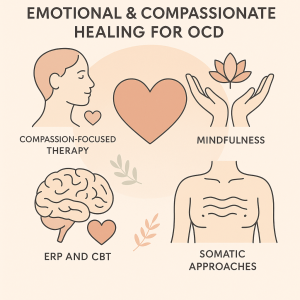
Compassionate healing doesn’t replace evidence-based treatment like ERP or CBT. Instead, it strengthens the emotional foundation needed to face fears, handle distress, and make lasting progress. When people feel safe, supported, and understood, recovery becomes not just possible — but sustainable.
Understanding OCD Beyond the Symptoms
Emotional Weight of Obsessions
Obsessions often trigger panic, confusion, or guilt. Intrusive thoughts can attack a person’s deepest values, leaving them afraid of what their mind is producing.
Shame, Fear, and Internal Conflict
Many individuals hide their OCD symptoms because they fear being judged. Shame intensifies compulsions, creating a cycle of fear and secrecy.
Why Compassion Matters in OCD Recovery
Compassion softens the inner critic and opens the door to healing. When individuals learn to speak kindly to themselves, they can approach recovery with hope instead of fear.
Root Causes of Emotional Distress in OCD
Cognitive Distortions
People with OCD often assume thoughts equal danger. This “thought-action fusion” intensifies anxiety and emotional pain.
Nervous System Dysregulation
OCD activates the fight-or-flight response. Emotional healing helps calm the nervous system so therapy becomes less overwhelming.
Trauma and Learned Fear Cycles
Stressful experiences can contribute to OCD patterns. Emotional tools help untangle these internal barriers.
Compassion-Focused Therapy (CFT) for OCD
Building the Inner Compassionate Voice
CFT teaches individuals to create a kind, supportive internal guide that counters fear and criticism.
Soothing System Activation
The body has a “soothing system” designed for calm and safety. CFT practices help activate it, lowering distress during exposures.
Self-Kindness vs. Self-Criticism
Replacing harsh self-talk with warmth empowers individuals to stay consistent in therapy.
Mindfulness and Emotional Awareness
Observing Thoughts Non-Judgmentally
Mindfulness teaches people to watch intrusive thoughts like passing clouds, instead of fighting them.
Mindfulness-Based ERP Support
Adding mindfulness to ERP helps individuals reduce resistance and increase emotional clarity.
Grounding Exercises
Grounding reconnects the body and mind through breath, touch, and sensory awareness, making distress manageable.
Integrating Emotional Healing with ERP and CBT
Reducing Fear of Intrusive Thoughts
When people understand that thoughts don’t define them, they become braver in ERP exercises.
Emotional Exposure Techniques
These techniques help individuals sit with uncomfortable feelings, not just feared situations.
Balancing Courage and Self-Compassion
Emotional & Compassionate Healing For OCD encourages people to challenge themselves gently yet consistently.
Somatic and Body-Centered Healing Approaches
Breathwork for OCD Anxiety
Slow breathing activates the parasympathetic nervous system, easing emotional tension.
Body Mapping and Emotional Tracking
Individuals learn where fear shows up in the body and how to release it.
Nervous System Co-Regulation
Supportive relationships help regulate emotional states and reduce overwhelm during recovery.
Holistic Tools for Compassionate OCD Support
Journaling with Kindness
Writing helps separate thoughts from identity and encourages emotional clarity.
Visualization and Inner Safe Place Practices
These exercises create feelings of safety that reduce resistance to exposures.
Creative Expression
Art, music, and gentle movement help release suppressed emotions in healing ways.
Healing for Loved Ones and Support Systems
Compassionate Communication
Family members learn to respond to OCD with understanding rather than fear.
Reducing Accommodation with Love
Loved ones can support recovery without feeding compulsions.
Family Emotional Resilience
Educated families help create stronger, safer recovery environments.
Benefits of Emotional & Compassionate Healing For OCD
Lower Shame and Self-Blame
Compassion helps individuals see OCD as a condition, not a personal failure.
Increased Motivation in Therapy
Emotional warmth provides strength during difficult exposures.
Stronger Sense of Safety & Self-Worth
People feel more confident, grounded, and empowered.
Limitations and Misunderstandings
Over-Focusing on Emotion Without Structure
Compassion is powerful, but it must work alongside ERP and CBT for best results.
Confusing Compassion with Avoidance
True compassion encourages growth, not avoidance of discomfort.
Not a Replacement for ERP — But a Partner
Emotional healing makes ERP more successful, not unnecessary.
Real-Life Case Examples
Healing Shame in Intrusive Thought OCD
A person struggling with violent intrusive thoughts learned self-compassion, reducing fear and opening the door to ERP success.
Developing Self-Compassion in Relationship OCD
Someone with ROCD used emotional healing techniques to challenge doubts and build trust in themselves and their partner.
Frequently Asked Questions
1. What is emotional healing in OCD?
It’s the process of addressing shame, fear, and emotional pain while supporting traditional OCD treatment.
2. Can compassion really help OCD?
Yes — compassion reduces self-criticism, increases resilience, and strengthens ERP progress.
3. Is emotional healing a replacement for therapy?
No. It works best when combined with CBT, ERP, or ACT.
4. Can mindfulness stop intrusive thoughts?
Not stop — but it helps you respond calmly instead of reacting with fear.
5. Do people with OCD struggle with shame?
Very often. Emotional & Compassionate Healing For OCD helps reduce this burden.
6. Where can I learn more?
You can explore research at the International OCD Foundation (IOCDF).
Conclusion
Emotional & Compassionate Healing For OCD provides the gentleness, strength, and understanding needed to support long-term recovery. By combining compassion, mindfulness, and proven therapeutic tools, individuals can face intrusive thoughts with courage and heal deeply from within. This heart-centered approach empowers people to live freely, confidently, and with renewed hope.