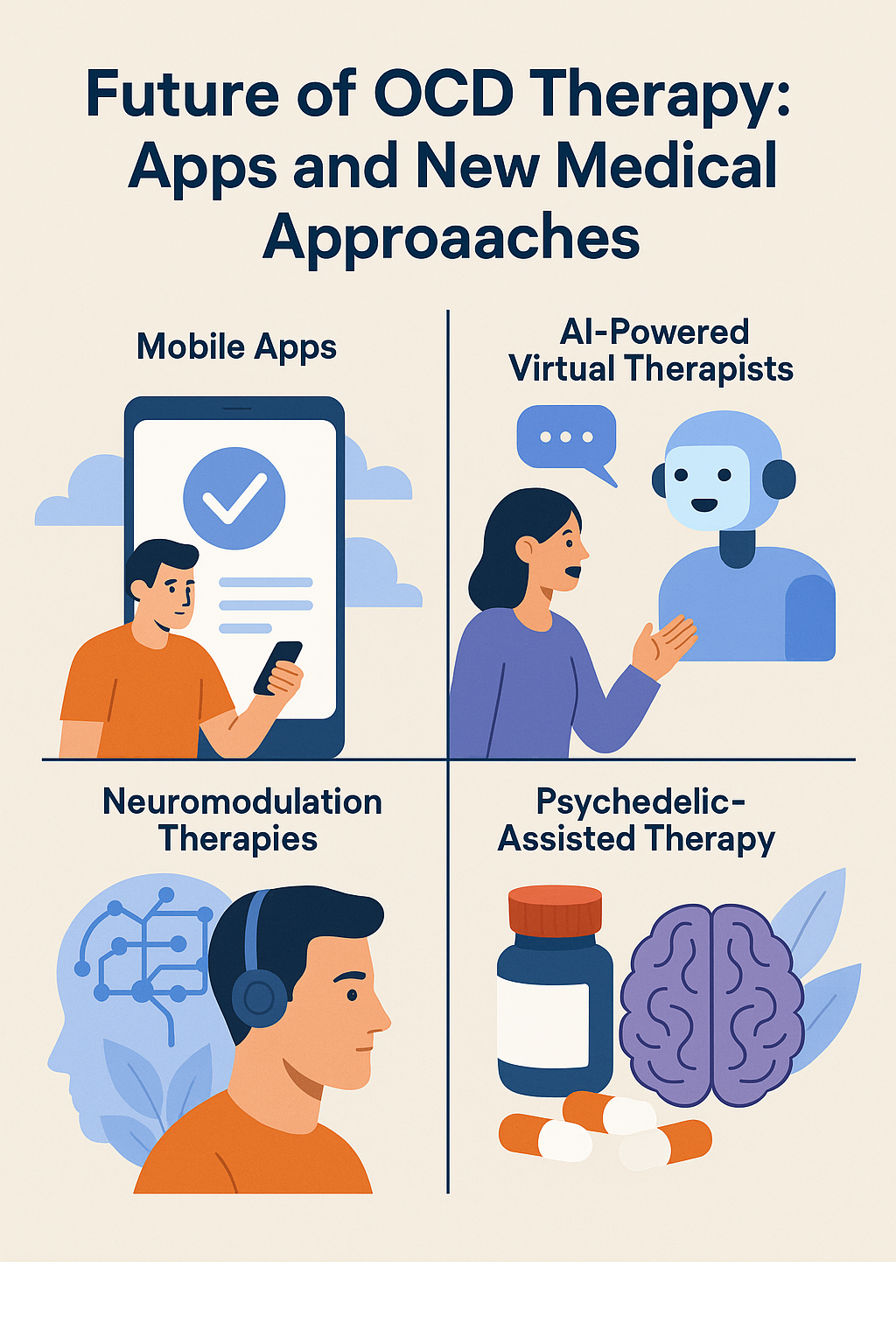
Future of OCD Therapy: Apps, and New Medical Approaches for a Digital Healing Revolution

Discover the Future of OCD Therapy through cutting-edge apps, AI-driven treatments, and new medical approaches like TMS, ketamine, and psilocybin therapy. Learn how digital tools are redefining mental health recovery.
Understanding OCD in the Modern Era
Obsessive-Compulsive Disorder (OCD) affects over 3% of the global population and is marked by intrusive thoughts and repetitive behaviors. Traditional treatments—Cognitive Behavioral Therapy (CBT) and Selective Serotonin Reuptake Inhibitors (SSRIs)—remain the gold standard, but they’re not universally effective. Around 30–40% of patients experience only partial relief, while others find therapy inaccessible due to cost, stigma, or geography.
This gap has driven the rise of a technological revolution in OCD therapy. The fusion of digital tools and advanced medical treatments is paving the way for personalized, data-driven, and accessible mental health care.
The Growing Need for Innovative OCD Therapies
Despite advances in psychiatry, OCD remains one of the most treatment-resistant mental health disorders. Long therapy durations, medication side effects, and limited clinical access have forced researchers and technologists to rethink the approach.
Enter: apps, neurostimulation, AI, and psychedelics—four pillars shaping the future of OCD therapy.
The Digital Revolution in OCD Therapy
Digital therapy has exploded since 2020, with the mental health app market expected to surpass $20 billion by 2026. This new wave includes CBT-based mobile apps, AI-powered mental health assistants, and VR exposure therapies.
Mobile Apps for OCD: The New Frontline Tools
Smartphones have become mini therapy hubs. Apps allow individuals to engage in daily self-help programs, track triggers, and monitor anxiety levels—all from home.
Self-Guided CBT and ERP Apps
Exposure and Response Prevention (ERP)—the cornerstone of OCD treatment—is now available digitally. Leading apps include:
NOCD: Offers therapist-guided ERP sessions via video calls and real-time tracking.
GG OCD: Focuses on gamified CBT exercises.
MindEase: Provides daily mood tracking and mindfulness tools.
Gamification and Habit-Tracking Innovations
By adding gaming elements like badges, streaks, and leaderboards, apps increase adherence. These micro-rewards reinforce exposure practices and help users manage compulsive behaviors more consistently.
AI-Powered Virtual Therapists
AI-driven chatbots such as Woebot and Youper replicate elements of cognitive therapy by engaging users in guided conversations. Advanced algorithms learn user patterns, offer custom coping strategies, and provide 24/7 emotional support—bridging the gap between therapy sessions.
Artificial intelligence is not replacing therapists—it’s amplifying their reach.
Emerging Medical Approaches for OCD Treatment
As technology improves mental health access, medical research is transforming treatment biology.
Neuromodulation Therapies
These methods target brain circuits involved in OCD, helping recalibrate overactive neural pathways.
Deep Transcranial Magnetic Stimulation (dTMS)
dTMS uses electromagnetic pulses to stimulate the anterior cingulate cortex and orbitofrontal cortex, areas implicated in OCD. FDA-approved since 2018, dTMS has seen enhanced protocols in 2025—combining shorter, more frequent sessions for faster results.
Non-invasive Brain Stimulation (tDCS, CES)
Transcranial Direct Current Stimulation (tDCS) and Cranial Electrotherapy Stimulation (CES) deliver mild electrical currents through the scalp to improve mood regulation. These affordable, portable devices can be used at home, democratizing access to brain-based treatments.
Psychedelic-Assisted OCD Therapy
Researchers are rediscovering the healing potential of psychedelics for conditions resistant to conventional treatment.
Ketamine-Assisted Therapy
Ketamine offers rapid symptom relief by enhancing glutamate activity, which helps remodel neural pathways. Unlike SSRIs, its effects can emerge within hours and last several days. Ketamine-assisted therapy pairs low-dose infusions with guided psychotherapy to sustain gains.
Psilocybin Microdosing Trials
Early-phase clinical trials suggest psilocybin, the active compound in magic mushrooms, may reduce obsessive thinking by resetting default brain network connectivity. Microdosing—taking very small, non-hallucinogenic doses—is under study for its long-term benefits and minimal side effects.
Precision Psychiatry and Data-Driven Treatment
Genetic and Biomarker Research
Scientists are developing genetic and neural markers to predict which therapies work best for specific individuals. Blood-based biomarkers, fMRI scans, and EEG readings now inform personalized OCD treatment plans.
Brain Mapping and Neurofeedback
Through real-time brain imaging, patients can learn to modulate their own brain activity. Neurofeedback therapy uses EEG to train self-regulation, allowing individuals to “rewire” thought loops tied to anxiety and compulsions.
Integrating Lifestyle and Digital Solutions
Holistic care isn’t just about therapy—it’s about synergy.
The Role of Digital Mindfulness Tools
Apps like Headspace and Calm now include OCD-specific meditation programs, helping users manage anxiety, build self-compassion, and reduce rumination.
Nutritional and Sleep Tracking Apps
Since diet and sleep directly affect serotonin levels, apps that track nutrition and circadian rhythms offer actionable insights into lifestyle adjustments that support OCD management.
Ethical and Privacy Challenges
Digital mental health raises questions about data privacy, consent, and AI transparency. Sensitive mental health data must be protected under strict encryption standards. Developers and clinicians must collaborate to ensure ethical implementation without compromising confidentiality.
Real-Life Case Studies
Case Study 1:
“Sarah,” a 29-year-old teacher, used NOCD and a wearable EEG device to manage contamination OCD. Within three months, she reduced compulsions by 40% and maintained progress through digital check-ins.
Case Study 2:
“Javier,” a 36-year-old engineer, underwent six ketamine-assisted therapy sessions. Combined with CBT reinforcement through a mobile app, his intrusive thoughts dropped by 50% over eight weeks.
FAQs on the Future of OCD Therapy
1. Are OCD apps as effective as traditional therapy?
Apps can’t replace human therapists but offer strong support, especially for mild to moderate cases.
2. Is TMS safe for long-term use?
Yes. Deep TMS has minimal side effects and is FDA-approved for OCD and depression.
3. Can AI therapists replace humans?
No—AI complements therapy by providing round-the-clock guidance and progress tracking.
4. Are psychedelics legal for OCD therapy?
Currently, psilocybin and ketamine treatments are only legal in supervised clinical or research settings.
5. How does neurofeedback help OCD?
By training patients to control their brainwave activity, reducing hyperactivity in anxiety-related circuits.
6. What’s next in OCD treatment?
Integration—combining digital therapy, biomarkers, and neuromodulation for personalized, hybrid care.
Conclusion: The Hybrid Future of Healing
The Future of OCD Therapy blends technology, neuroscience, and human compassion. Mobile apps democratize therapy, AI scales mental health care, and emerging medical approaches like TMS and psychedelics unlock new hope for treatment-resistant OCD.
As innovation continues, the vision is clear: a hybrid ecosystem where digital tools, medical breakthroughs, and personal agency merge to create lasting mental wellness.
External Resource
For in-depth OCD treatment updates, visit the International OCD Foundation and Harvard Health Publishing – Mental Health Section.

